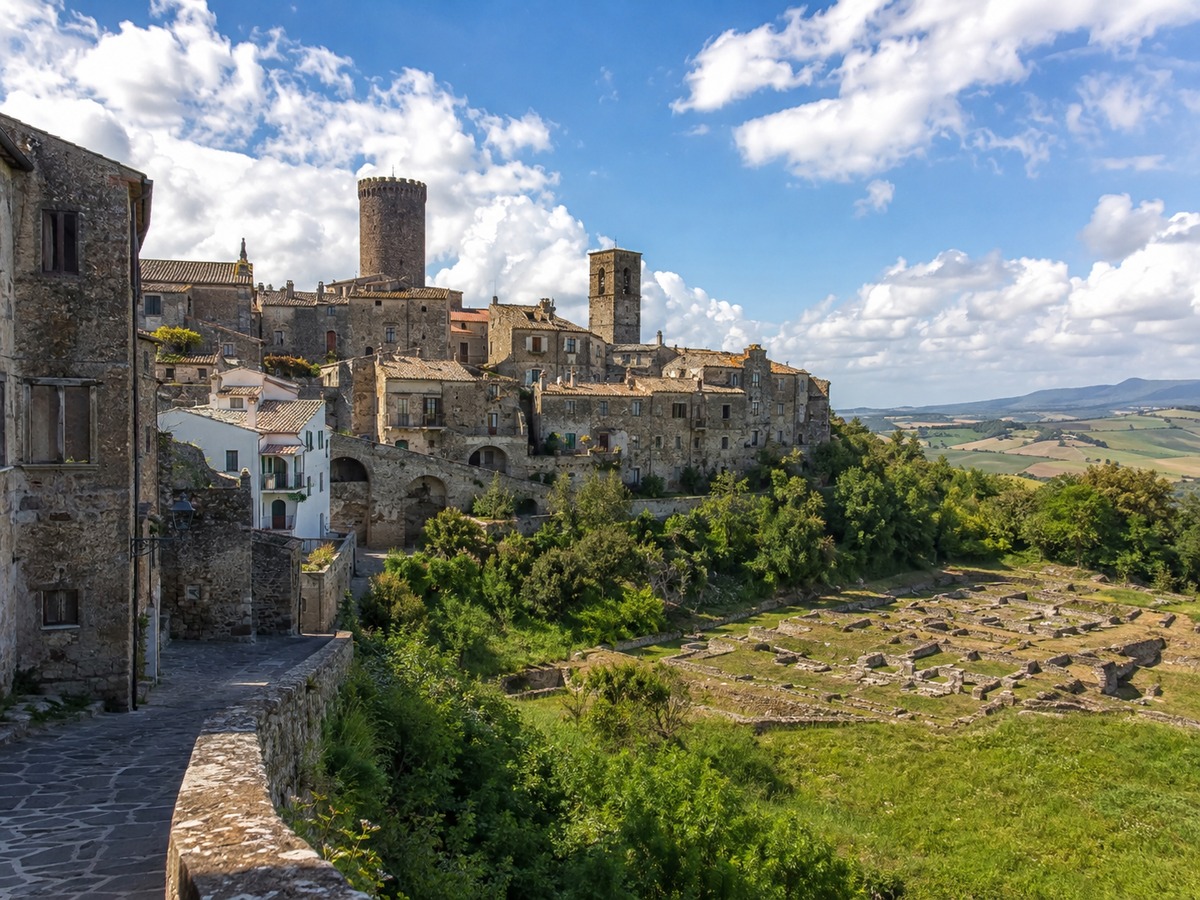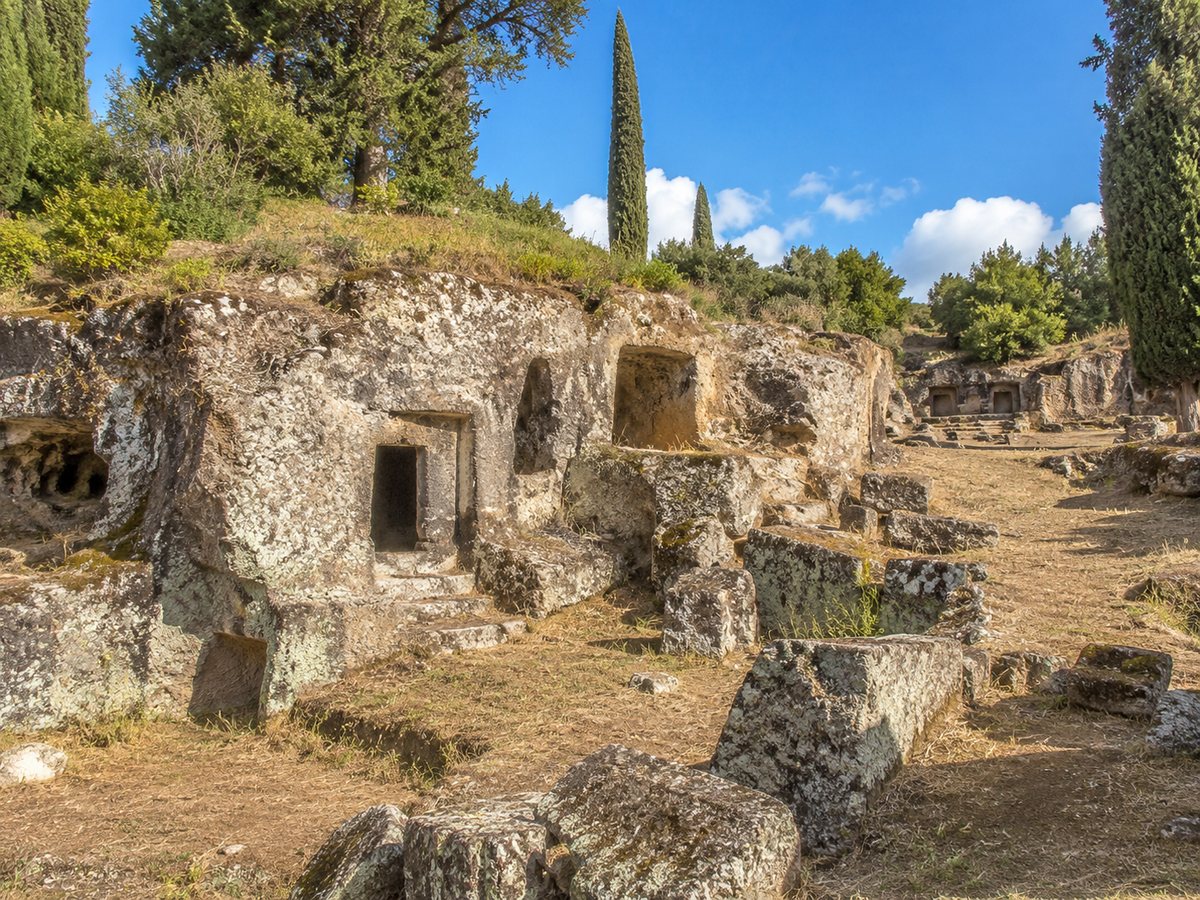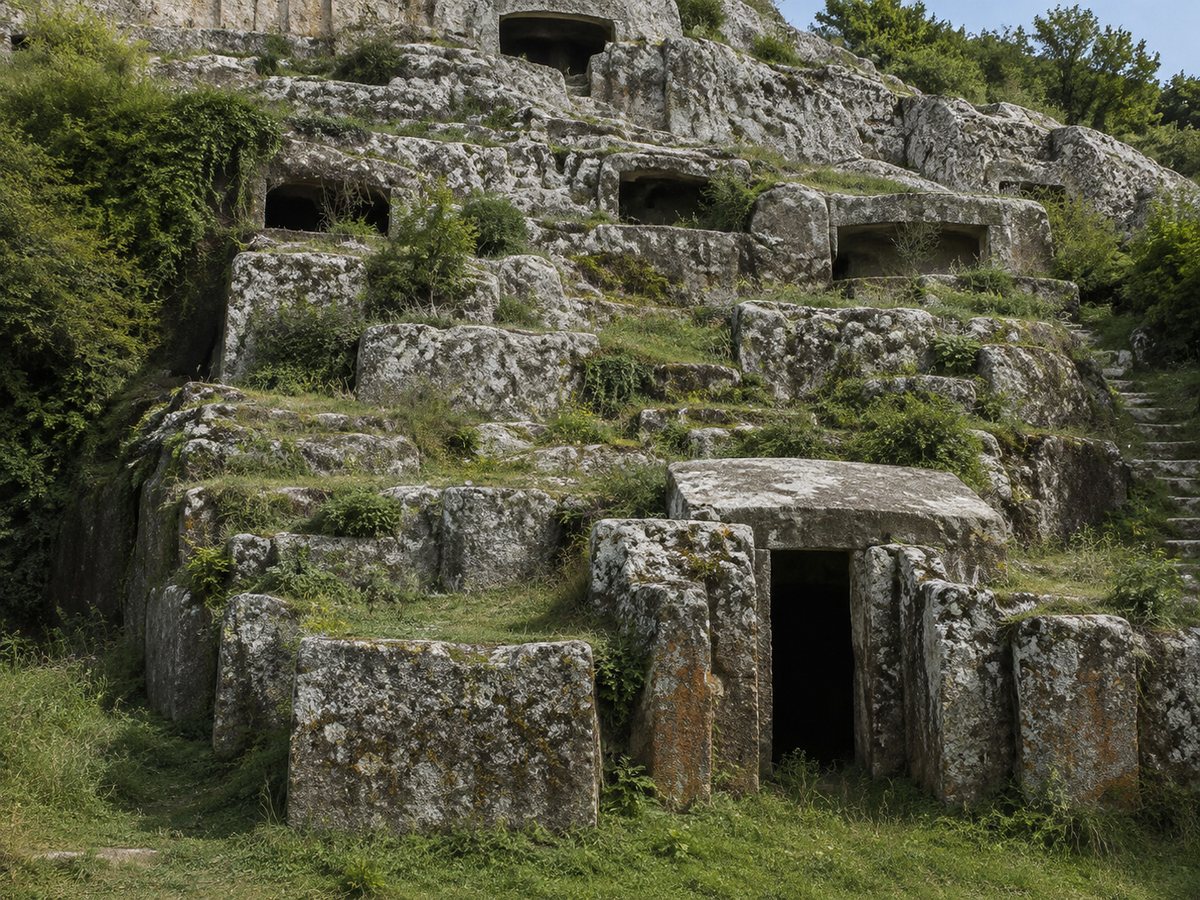
The Castro area is best known for the ruins of the Farnese Renaissance city destroyed in the 17th century, but the site's history begins much earlier. At the foot of the plateau grew an Etruscan necropolis linked to a settlement in the Vulci hinterland, important for controlling routes along the Fiora valley. Excavations carried out in the 1960s by the Belgian Centre for Etrusco-Italic Studies uncovered several remarkable funerary complexes, including the Tomba della Biga (Tomb of the Chariot).
The Tomba della Biga
The tomb was discovered in 1967. Its long entrance passage yielded an Etruscan chariot and the remains of two horses, while the grave goods pointed to the high rank of the person buried there. The chariot is usually kept at Viterbo's National Etruscan Museum, while the tomb itself is part of the Ancient Castro Archaeological Park.
The aristocracies of the Vulci hinterland
The monumental tombs and rich grave goods show that Castro was no marginal settlement. Archaeological research links it to the sphere of Vulci and the communication networks that crossed the hinterland between the 7th and 6th centuries BC.
Etruscans and Farnese in the same landscape
The visit can continue among the ruins of Renaissance Castro. Two very different stories overlap in the same territory: the Etruscan city, and the Farnese city wiped out in 1649.