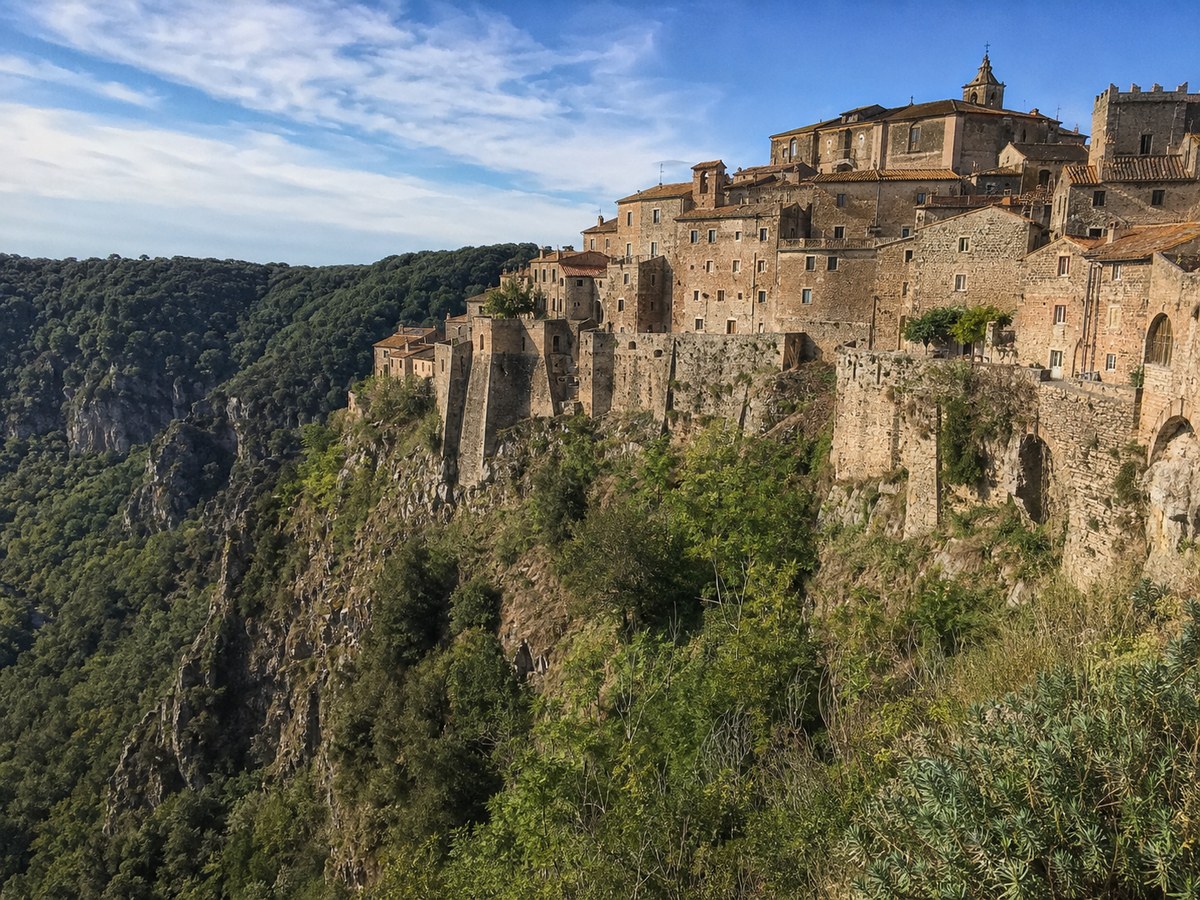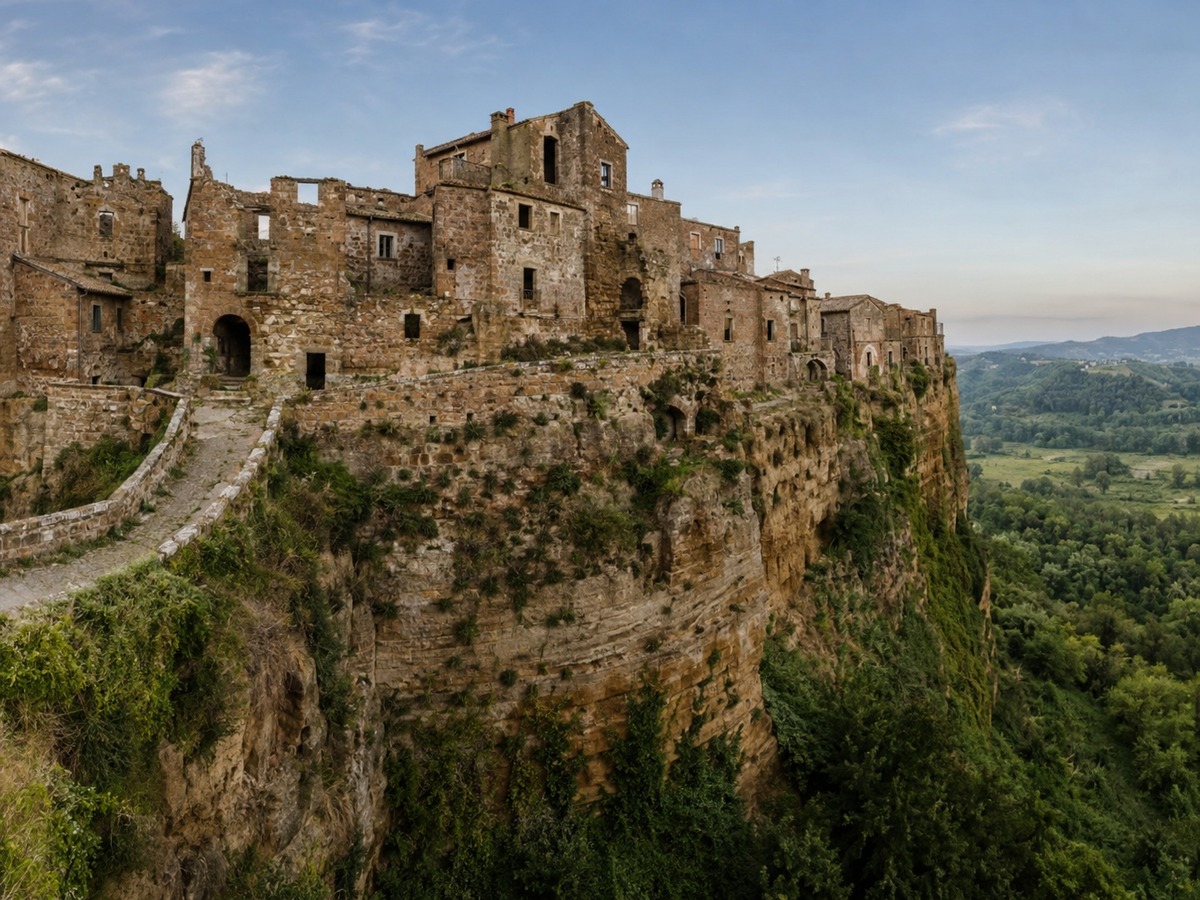
Old Celleno sits on a tuff outcrop overlooking the Tiber valley. The old village, now known as the "ghost village", preserves the Castello Orsini along with the remains of houses, alleys and structures cut into the rock — a place that tells not the story of sudden destruction, but of a community's gradual move to safer ground.
The instability of the terrain had been known for centuries, and earthquakes and landslides worsened the situation over time. A new town centre was built in the 20th century, and in 1951 the resettlement of residents away from the old core was formalised, leaving part of the village on the cliff stripped of its former residential role.
Castello Orsini and the empty houses
The approach to the village leads toward Castello Orsini, the most recognisable landmark of the old centre. Around it stand tuff buildings, cellars, arches and fragments of houses that make the structure of the old settlement clear to see. Rather than a fully deserted town, Celleno today is a place restored for visitors and cultural life, while still keeping the suspended atmosphere that earned it the name "ghost village".
A landscape of tuff, olives and cherries
Celleno's appeal also lies in its surrounding landscape. The cliff looks out over the Teverina, amid fields, olive groves and cherry orchards — the village has long been tied to cherry farming and celebrates the tradition with a historic local festival.
A quieter side of Tuscia
Celleno is often compared to Civita di Bagnoregio, but the experience is different: the visit here feels more intimate, and the relationship between ruins, landscape and the memory of abandonment is the real reason to stop. It pairs easily with Sant'Angelo di Roccalvecce and Roccalvecce in the same itinerary.