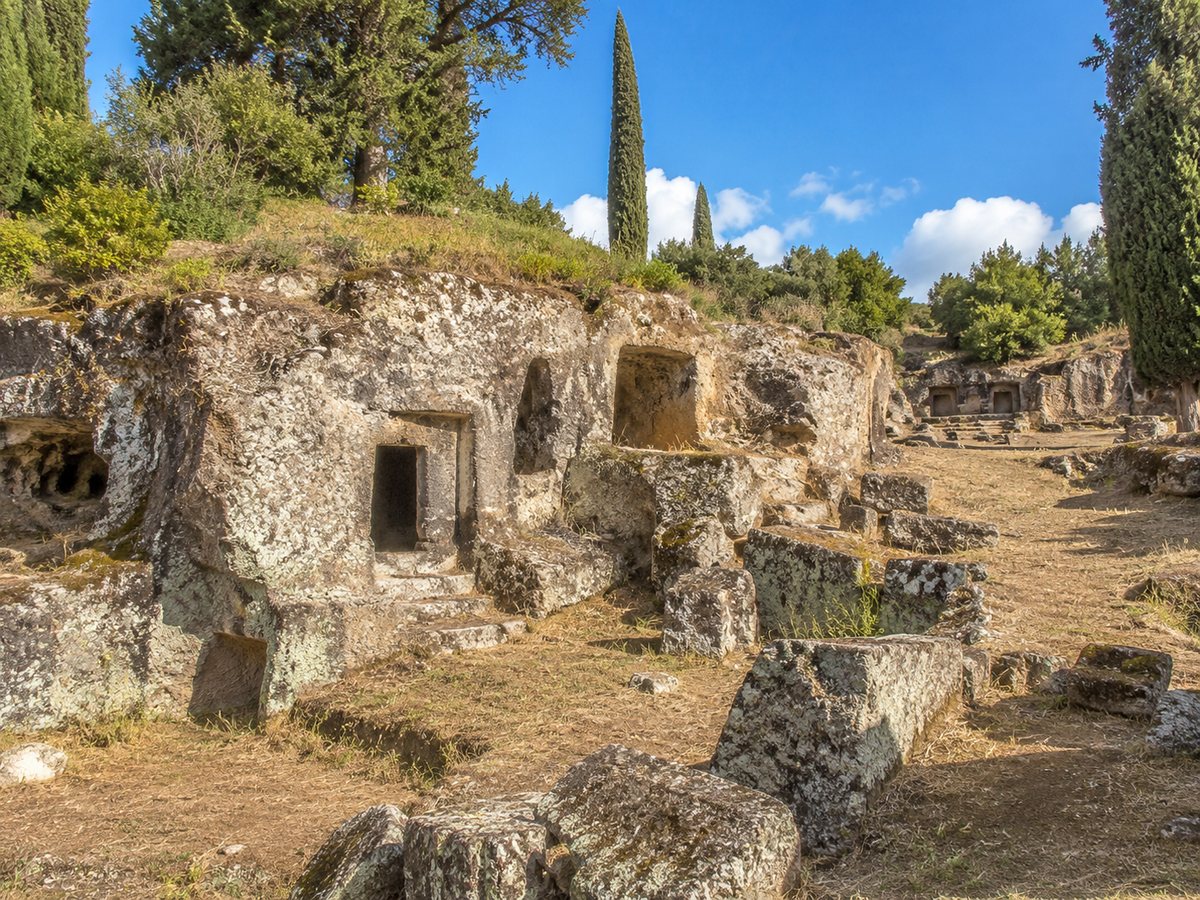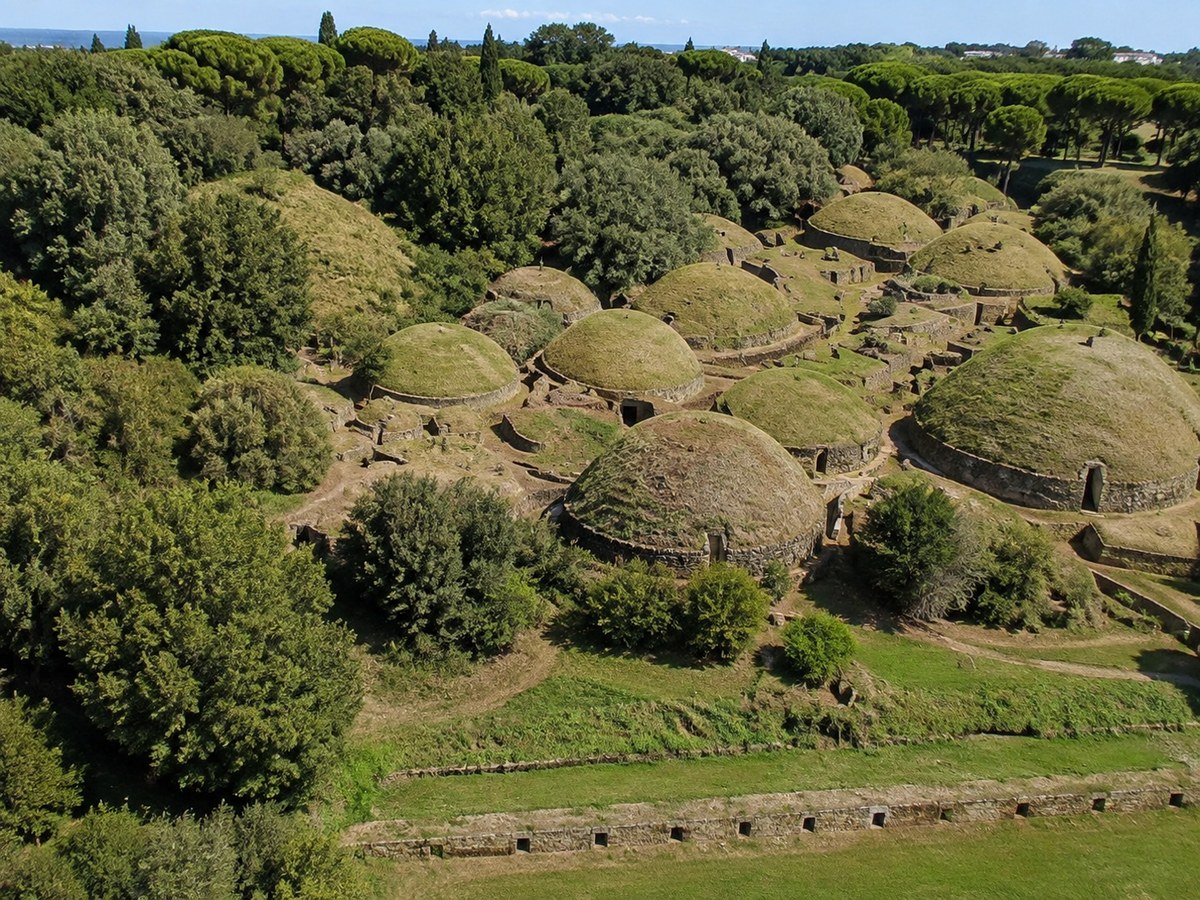
The Banditaccia necropolis spreads across a tuff plateau next to Cerveteri, ancient Caere. Used for many centuries, it holds thousands of tombs laid out along streets and open spaces that echo the structure of a city. Since 2004, together with the Monterozzi necropolis in Tarquinia, it has been a UNESCO World Heritage Site.
What sets Cerveteri apart is above all architectural: many tombs reproduce the interiors of Etruscan homes, letting us reconstruct forms of domestic life almost entirely lost from the settlements themselves.
Tumuli, streets and underground houses
The earliest burials are shaft and pit tombs; from the 7th century BC, large tumuli with burial chambers cut into the tuff took hold, followed by cube tombs laid out more regularly along the funerary streets. Walking through the monumental enclosure feels like crossing neighbourhoods built for the dead.
The Tomb of the Reliefs
Among the most famous monuments is the Tomb of the Reliefs, belonging to the Matuna family: its walls preserve stucco decorations depicting objects, weapons, tools and figures tied to domestic and funerary life — one of the clearest examples of how tomb architecture mirrored the homes of the living.
Banditaccia and the Cerite Museum
The visit can be rounded off at the National Cerite Archaeological Museum in Cerveteri's old town. The necropolis and museum are both part of the same Archaeological Park of Cerveteri and Tarquinia.