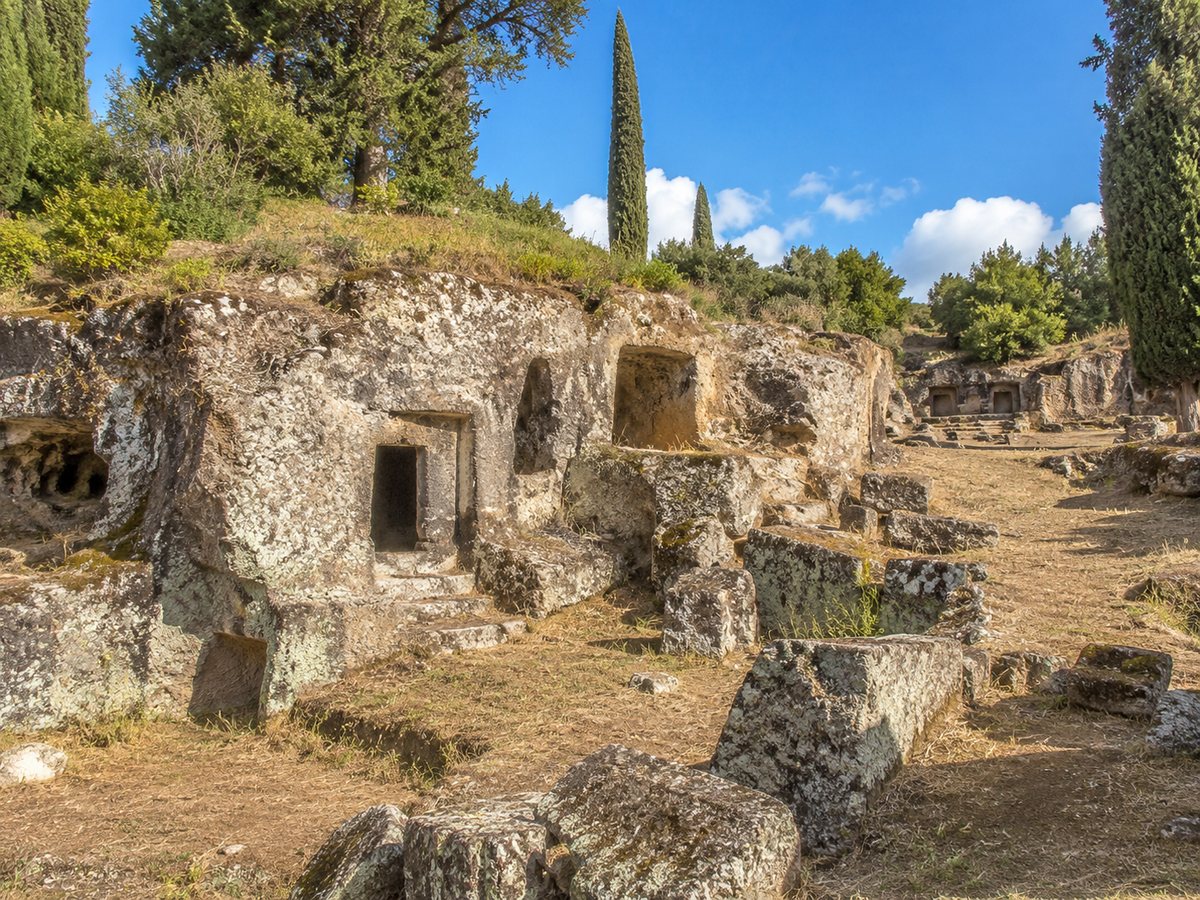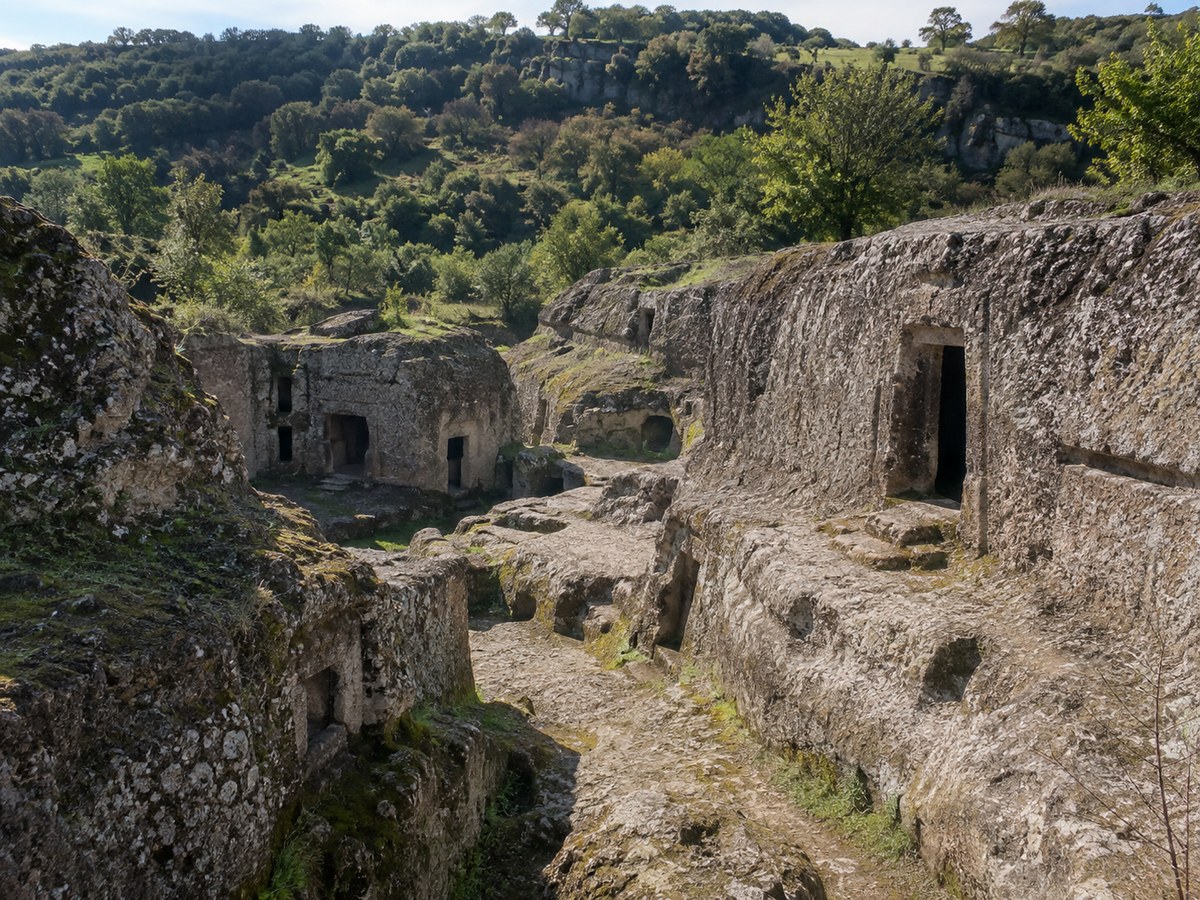
The San Giuliano necropolis lies within the Marturanum Regional Nature Park, around Barbarano Romano. It's one of the places where archaeology and landscape blend most seamlessly in Tuscia: tombs are scattered across tuff slopes and plateaus, among woods, ravines and ancient paths. The complex spans several eras, with tumuli dating back to the 7th century BC and the most distinctive rock-cut architecture belonging to the archaic age (6th-5th century BC).
A catalogue of Etruscan funerary architecture
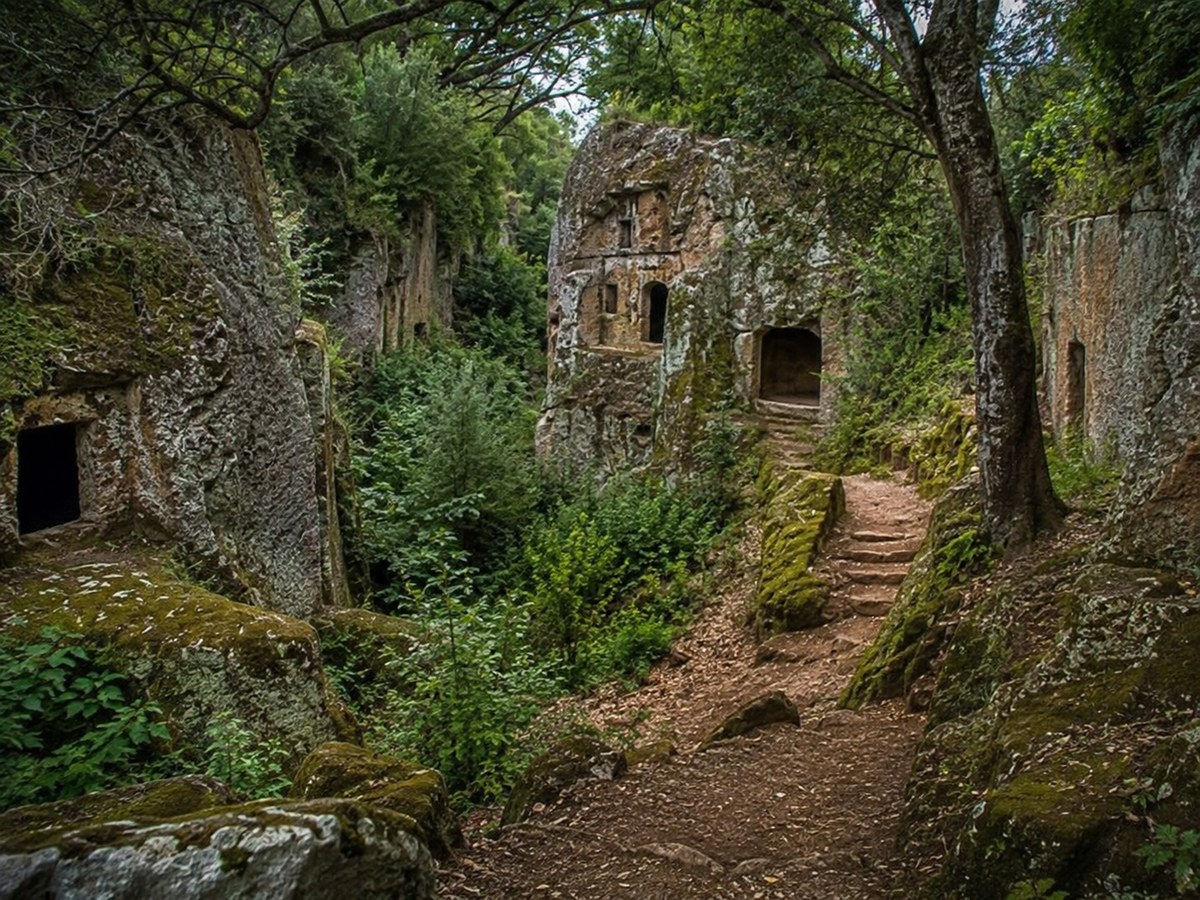
San Giuliano preserves cube tombs, portico tombs, hypogea, pit tombs and niche tombs — a variety that makes the site especially interesting, as it lets visitors see very different funerary solutions within the same landscape. Among the best-known monuments: the Cuccumella del Caiolo, the Tomba dei Letti, the Palazzine, the Tomba del Cervo and the Tomba della Regina.
The Tomba del Cervo
One of the necropolis's signature images is the relief carved on the Tomba del Cervo (Deer Tomb), where the outer facade becomes a full-fledged architectural statement, turning the tuff wall into a monumental space.
Archaeology inside Marturanum
San Giuliano isn't separate from its landscape: reaching many of the tombs means walking the reserve's trails. That makes the visit both archaeological and a hike, and it's worth setting aside several hours for it.