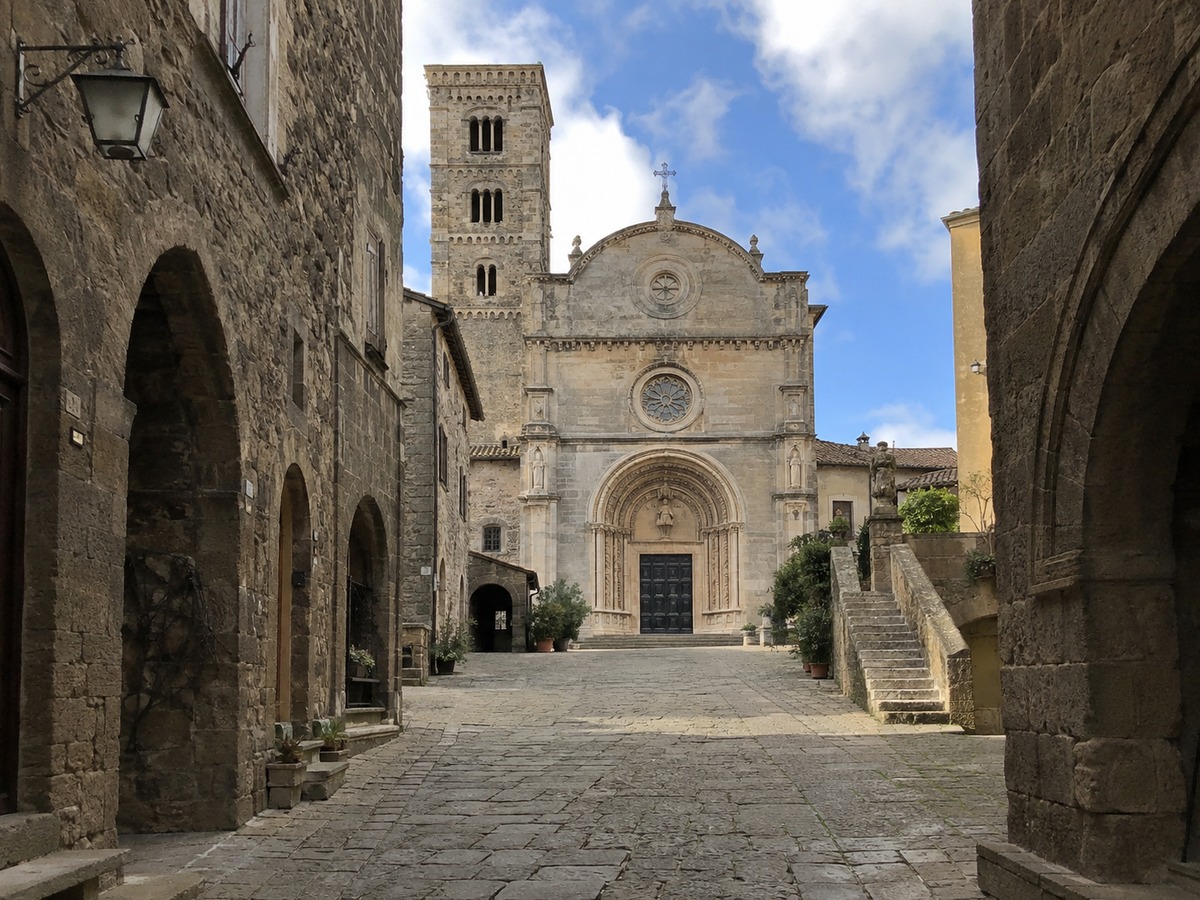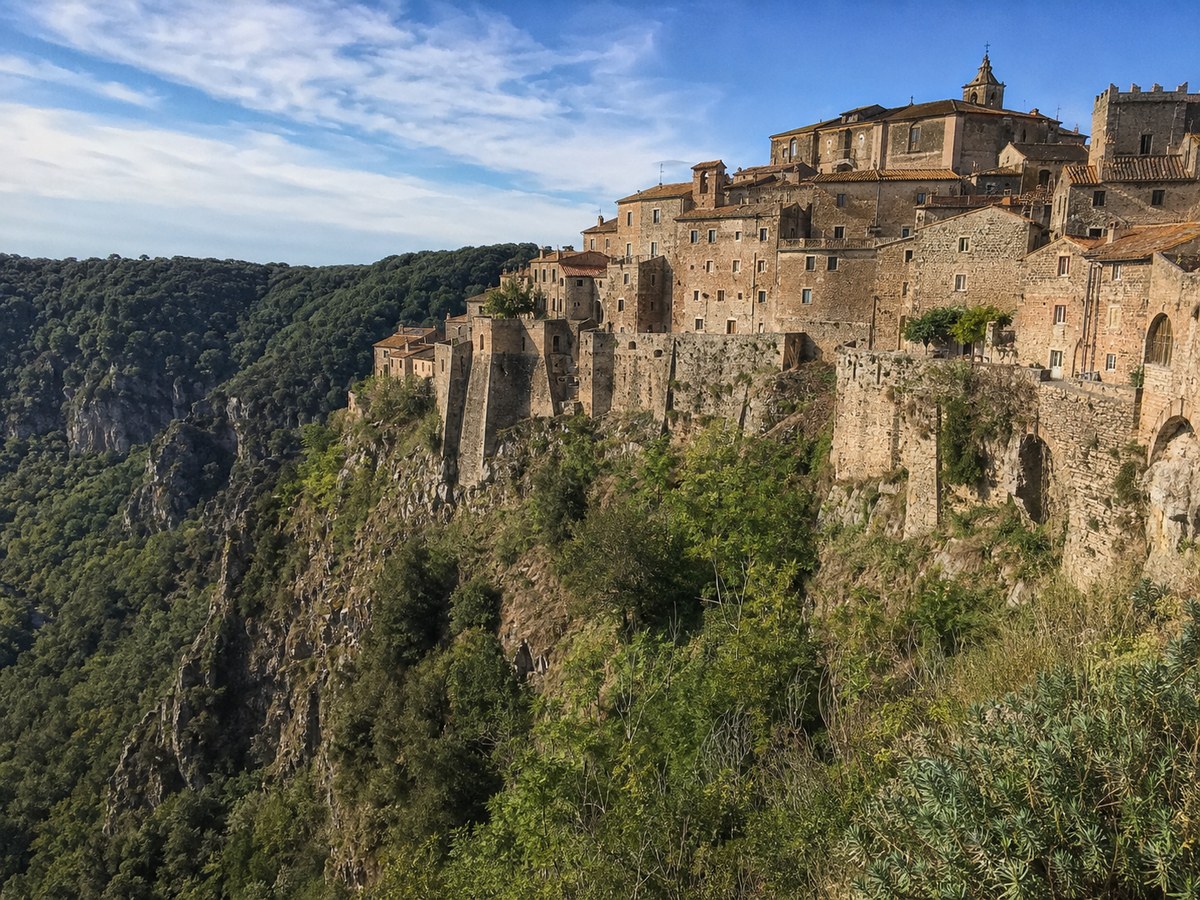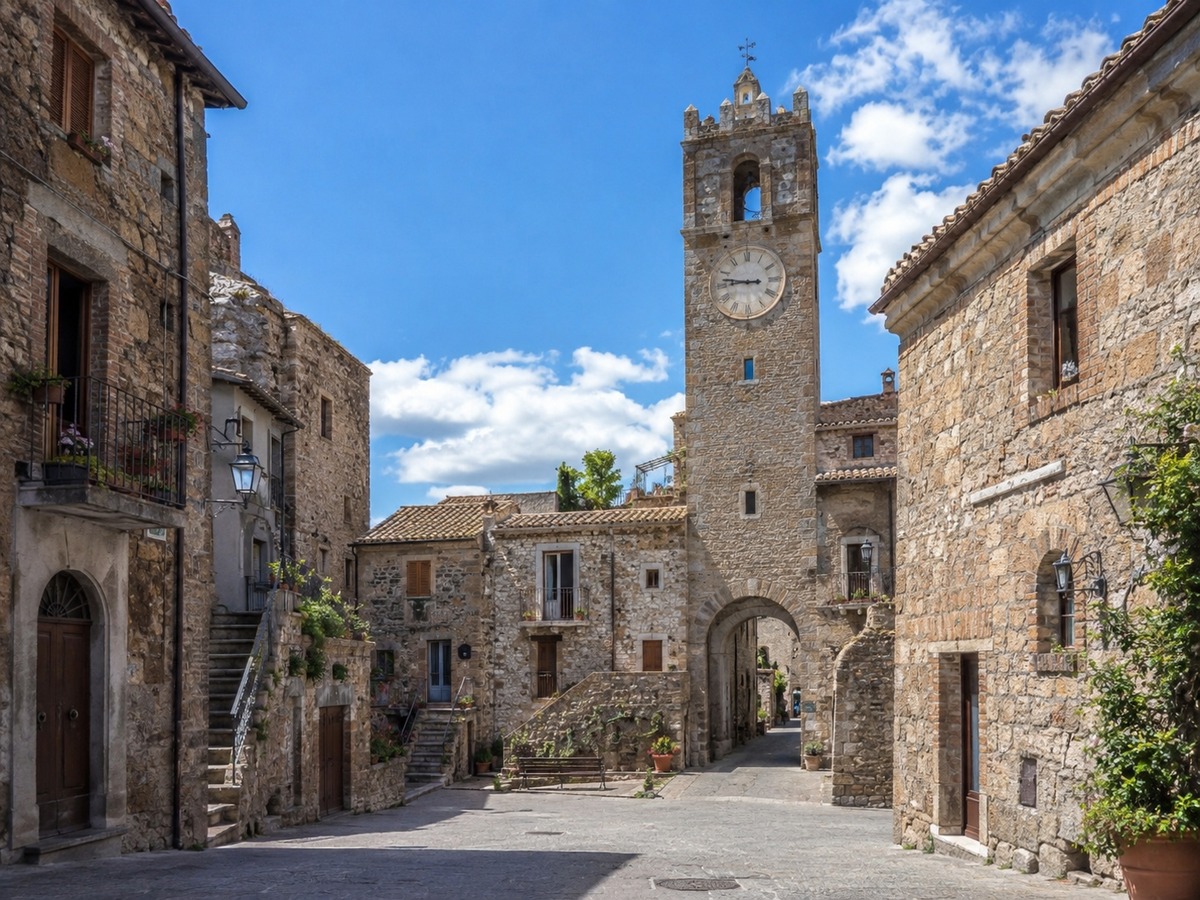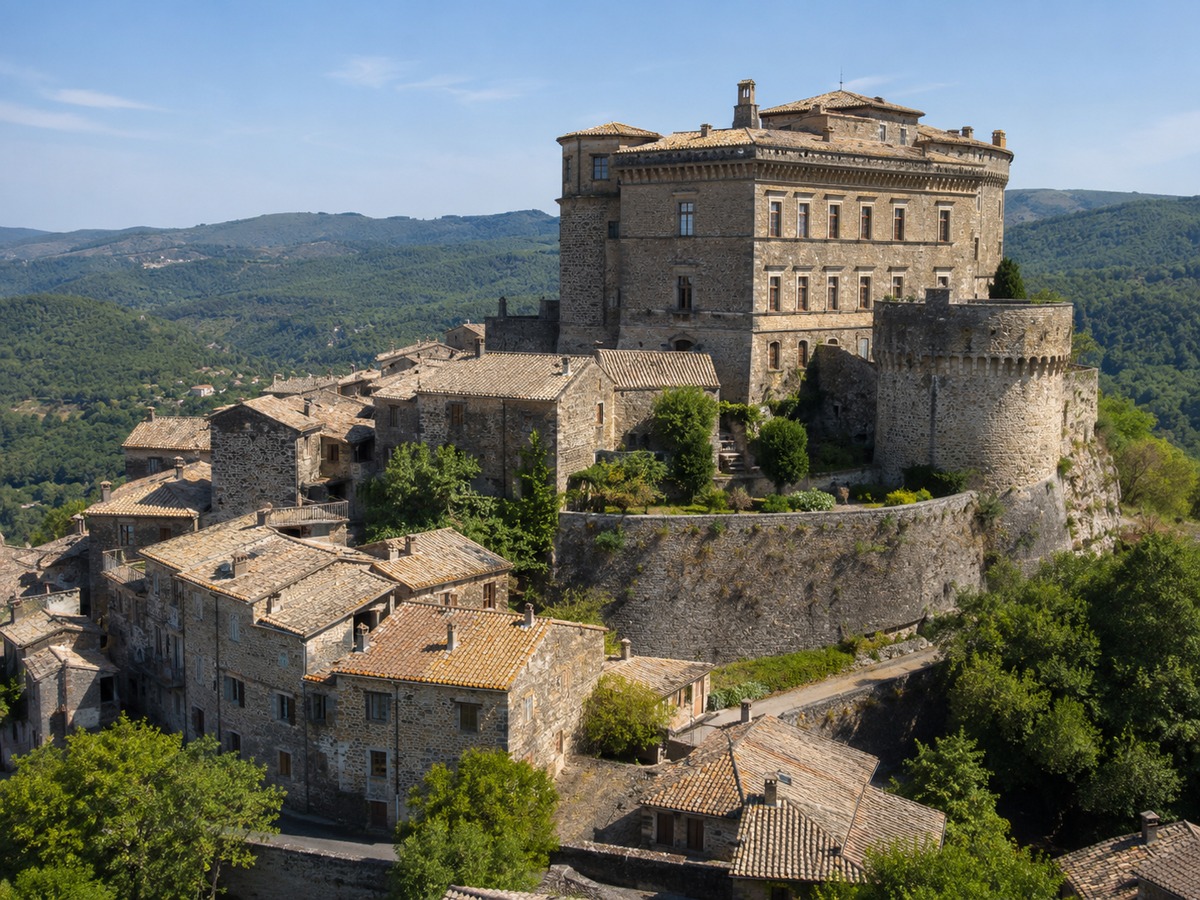
Roccalvecce is a hamlet of Viterbo tucked among the hills of the Teverina. Its historic core began as a medieval stronghold, with the earliest documentary sources dating to the late 12th century. Today the village retains a compact layout, gathered around the main square and the large building that defines its profile: Castello Costaguti.
The residence passed through several noble families over time; the coats of arms of the Gatti, Baglioni and Costaguti families are still visible on the facade. The Costaguti have owned it since the mid-17th century and have permanently attached their name to the palace.
Inside Castello Costaguti
The castle spans several levels, and its piano nobile preserves frescoed rooms, stuccowork and a great hall with a coffered ceiling. The building materials — peperino, nenfro, tuff and sandstone — are typical of Tuscia's historic architecture and give the building a sterner character than the region's grand Renaissance palaces.
La Vignaccia, the historic garden
At the foot of the village lies La Vignaccia, a historic park linked to the castle. Laid out in the 18th century, the garden includes a staircase, an 18th-century fountain, monumental trees and an old lemon house. It's a lesser-known part of the complex, and it helps tell the story of the residence's role as a noble home, not just a fortification.
A village to pair with Sant'Angelo
Roccalvecce is a short, quiet stop. The most natural pairing is with Sant'Angelo di Roccalvecce, the Fairy-Tale Village, just minutes away, and with Celleno: three very different places clustered in the same corner of Tuscia.