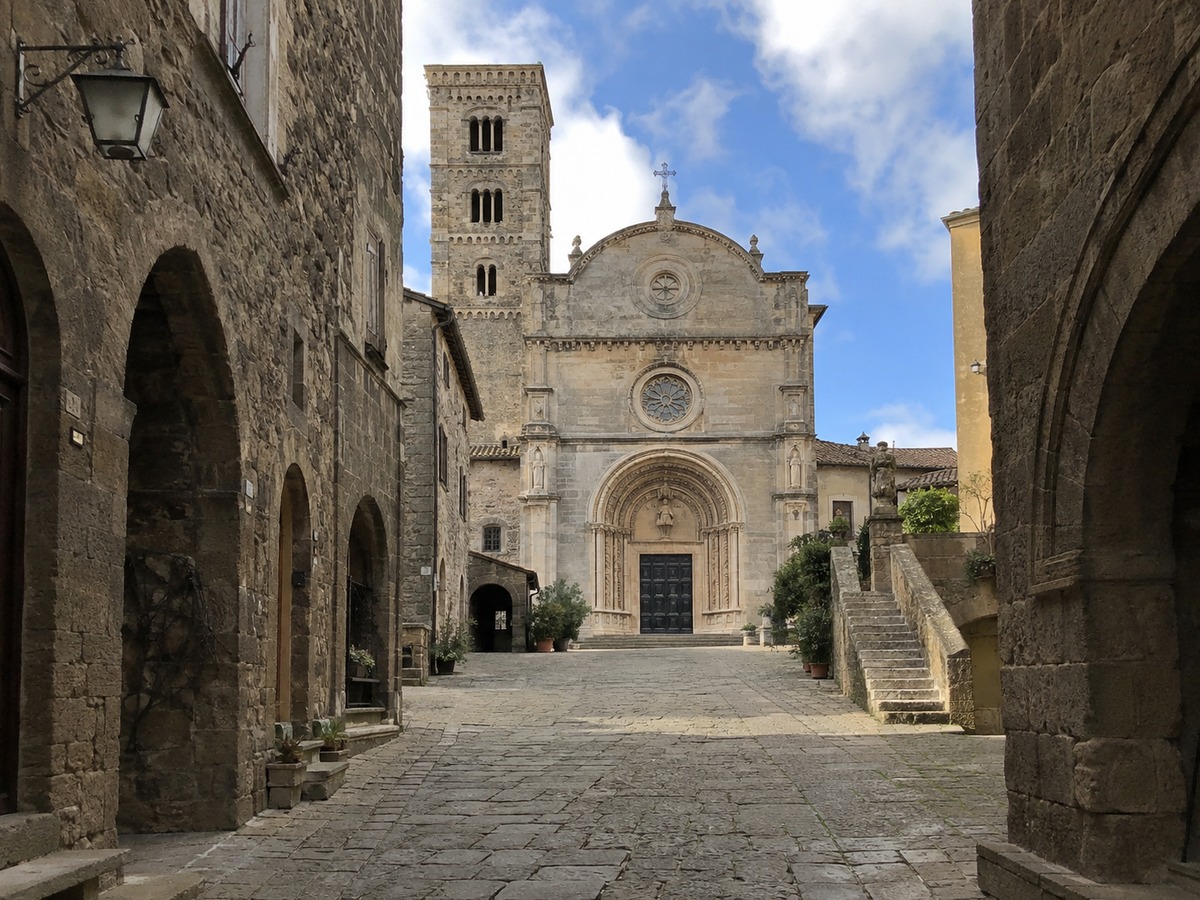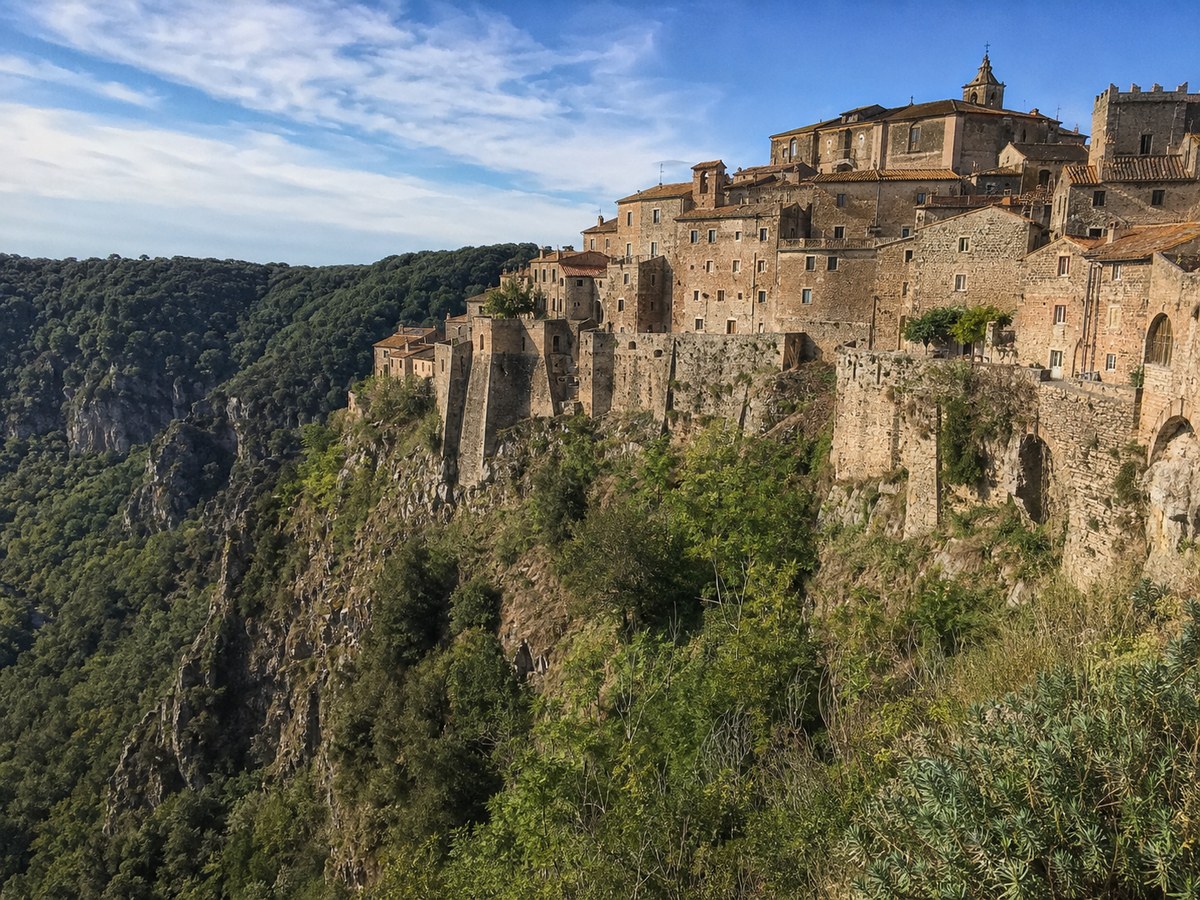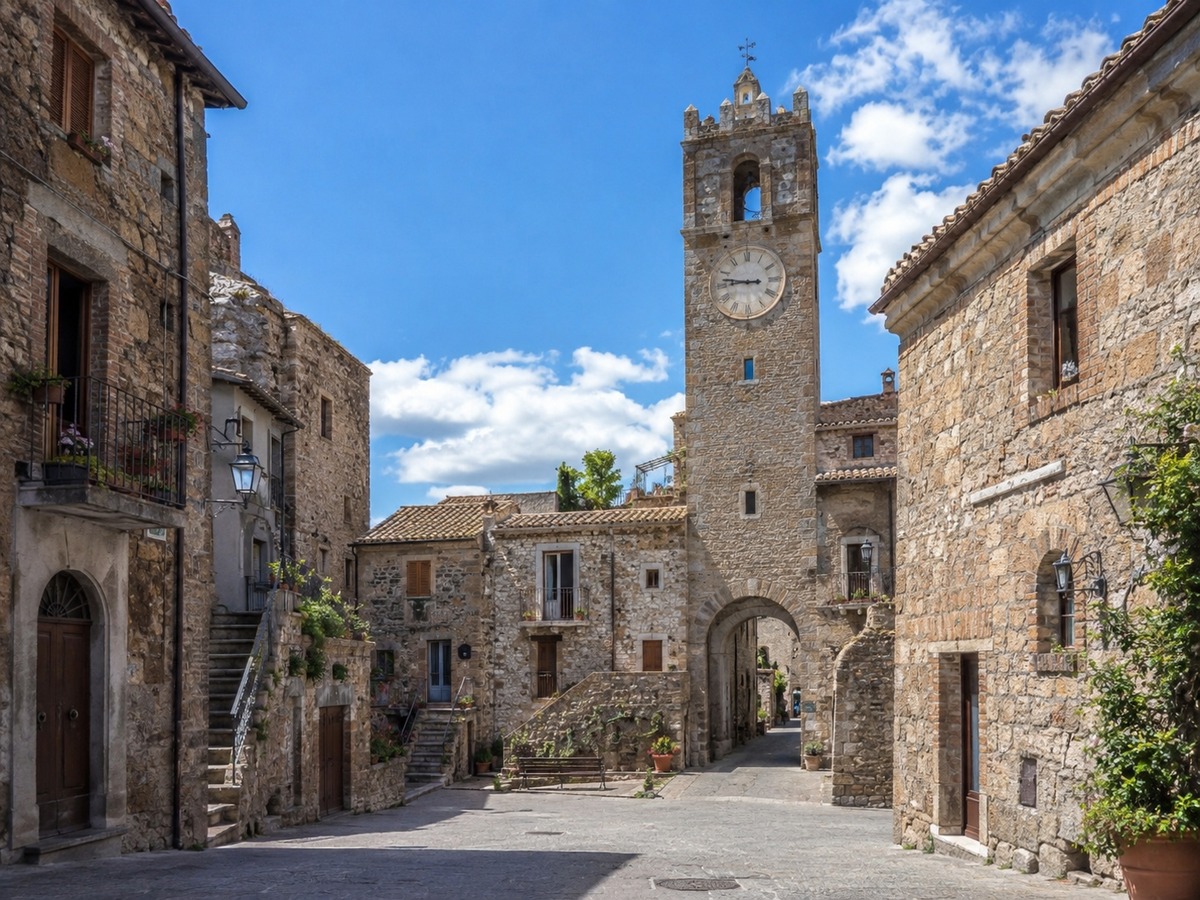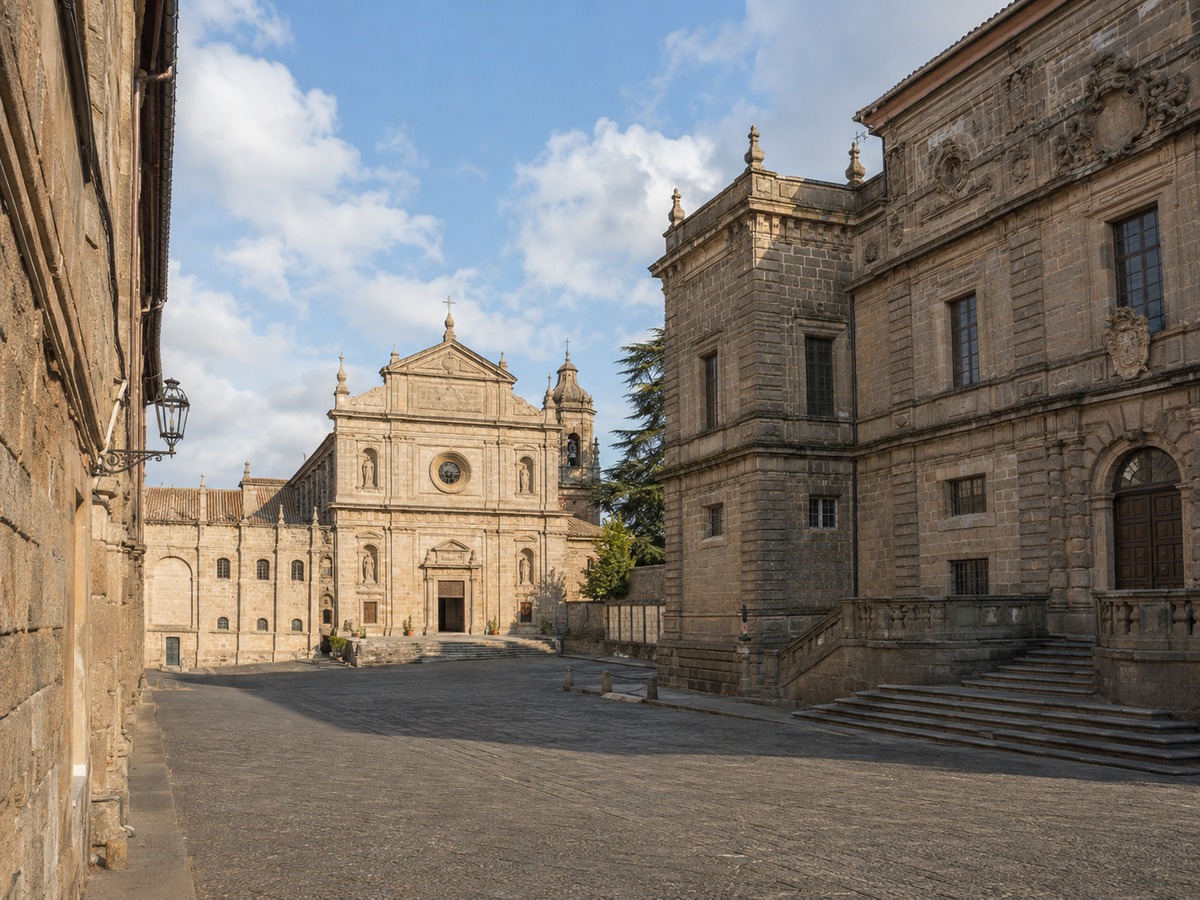
San Martino al Cimino sits on the slopes of the Monti Cimini, a few kilometres from Viterbo. The heart of the village is the old Cistercian abbey, around which the first medieval settlement grew up. In the 17th century, the village changed dramatically thanks to Olimpia Maidalchini Pamphilj, sister-in-law of Pope Innocent X, who transformed San Martino into a small aristocratic settlement built around the abbey and a new palace.
The result is one of the most distinctive urban ensembles in Tuscia: the church's large facade dominates the upper part of the village, while houses lined along the streets follow the climb up toward the monumental complex.
The Abbey of San Martino
The abbey reflects its Cistercian origins and preserves the essential character of medieval monastic architecture, with a large church that today serves as the parish church. It's the natural starting point for reading the village's history: first a monastery, then the centre of a settlement transformed over the centuries but still organised around the old religious complex.
Palazzo Doria Pamphilj
In the mid-17th century, Olimpia Maidalchini commissioned architect Marcantonio De Rossi to reorganise the village and convert parts of the old abbey into an aristocratic residence. Palazzo Doria Pamphilj preserves formal reception rooms, wooden ceilings and spaces tied to its former monastic function; from its upper floors, the view opens over the village rooftops and the Viterbo plain.
The terraced-house village
The 17th-century transformation wasn't limited to the palace. Houses were arranged in compact, adjoining rows, creating a unified urban fabric that still sets San Martino apart from other towns in the province. The visit is brief, but the abbey, palace and village layout read well together as a whole.