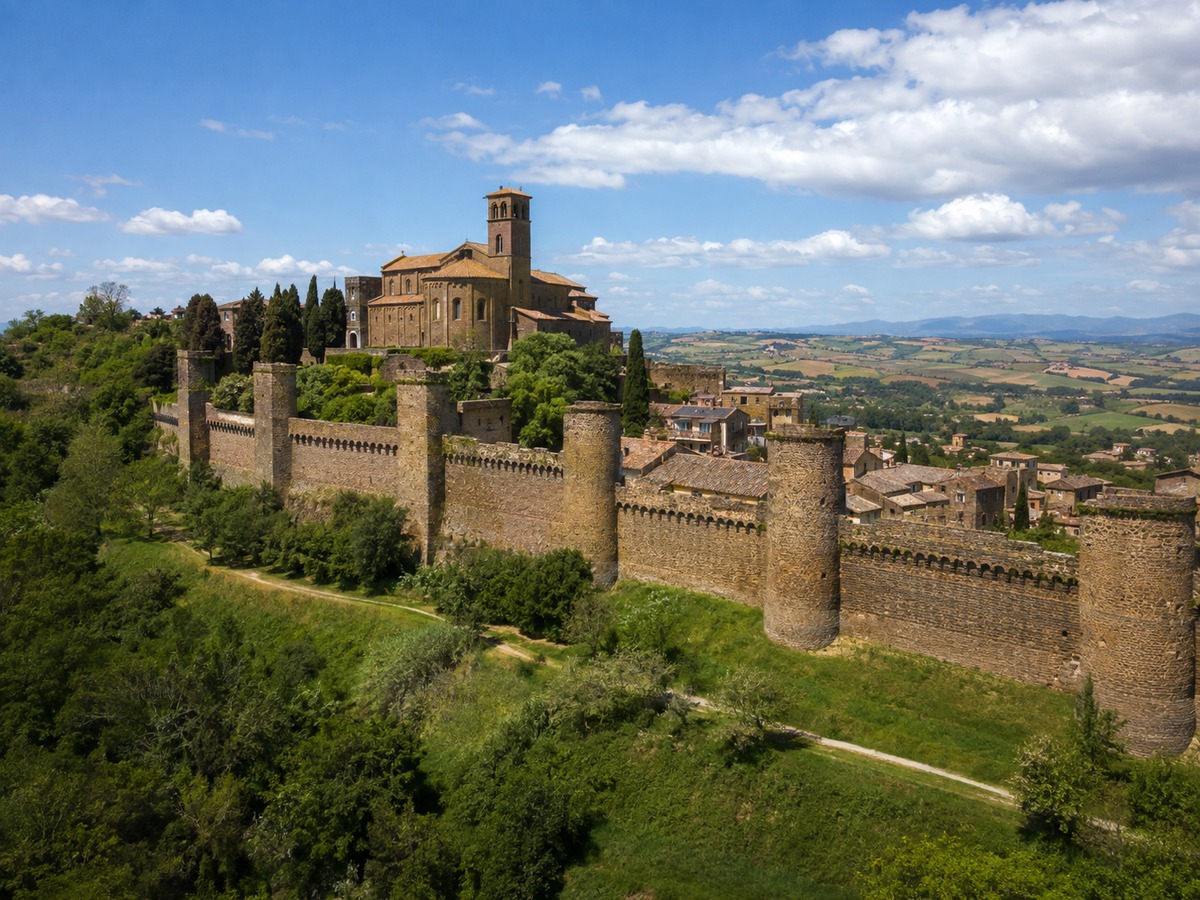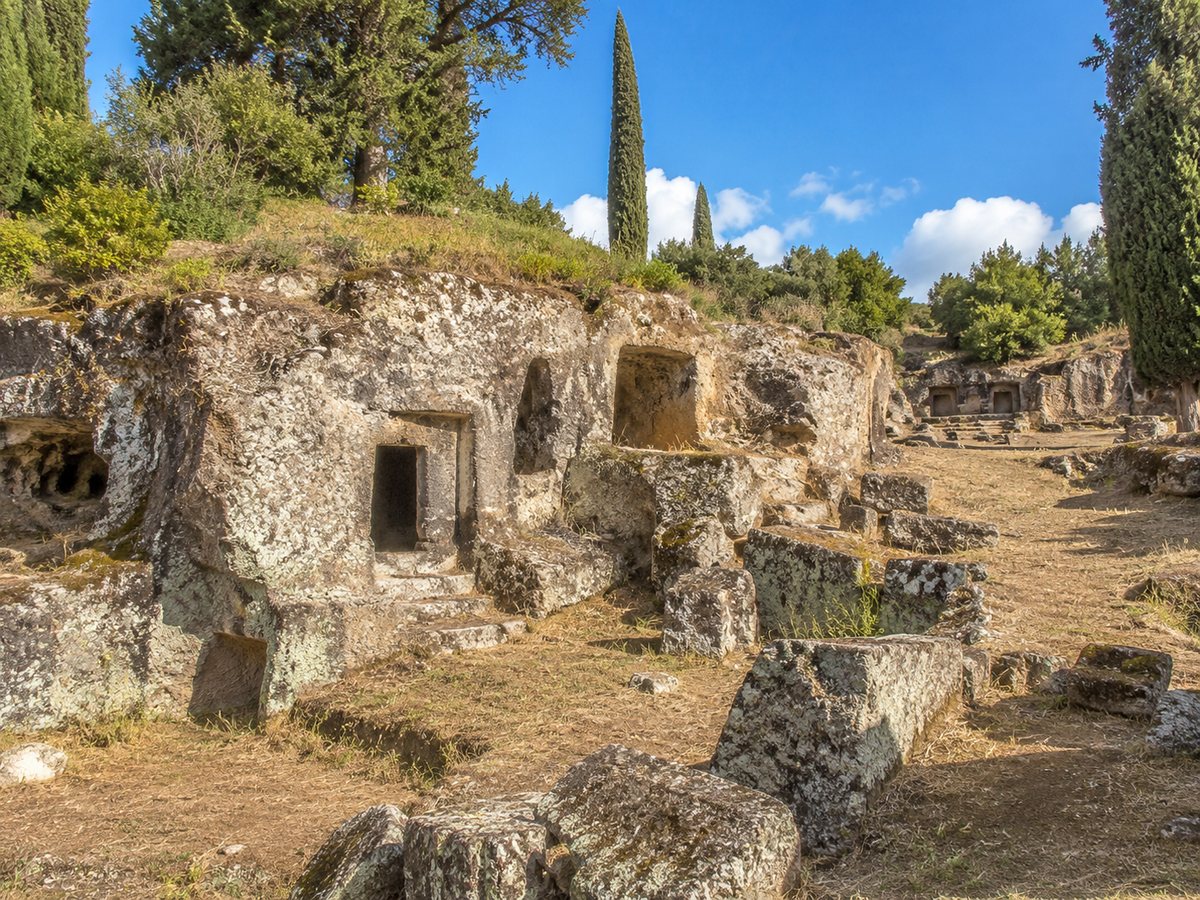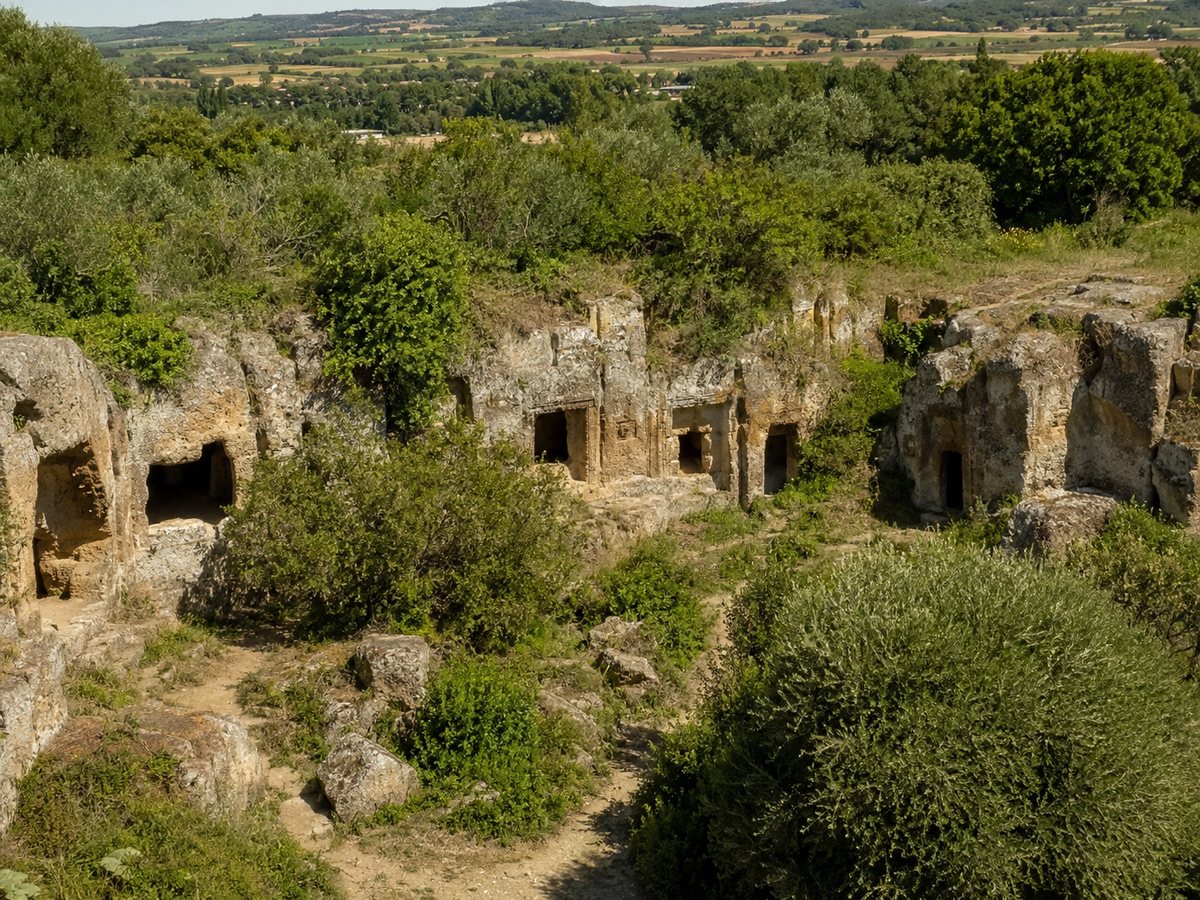
Tuscania holds a far richer Etruscan heritage than a visit limited to its medieval centre might suggest. Numerous necropolises surround the old settlement, including Madonna dell'Olivo, Peschiera, Pian della Mola and other complexes now under protection and being developed for visitors. The Madonna dell'Olivo necropolis, about two kilometres southwest of the city, is the most visitor-ready site: in use as early as the 6th-5th century BC, it's best known for its Hellenistic burials from the 4th to the 1st century BC.
Madonna dell'Olivo and the Curunas family
In 1967, the Tomb of the Sarcophagus of the Amazons and the tombs of the Curunas family came to light. The grave goods and sarcophagi found are preserved in Tuscania's National Archaeological Museum, and reveal the role of the city's aristocratic families in the Hellenistic period.
The Grotta della Regina
Within the same complex lies the Grotta della Regina, a large Etruscan hypogeum whose use and layout have inspired several interpretations — one of the most striking spaces in Tuscania's archaeology. The visit also offers views over the Marta valley and the San Pietro hill, drawing an immediate line between the city of the living and the city of the dead.
Peschiera and the other necropolises
Peschiera is another major name in Tuscania's archaeology. In 2026, the Soprintendenza and the municipality launched a multi-year agreement to develop a network that includes, alongside Madonna dell'Olivo and Peschiera, Pian della Mola, Sasso Pinzuto and other sites.