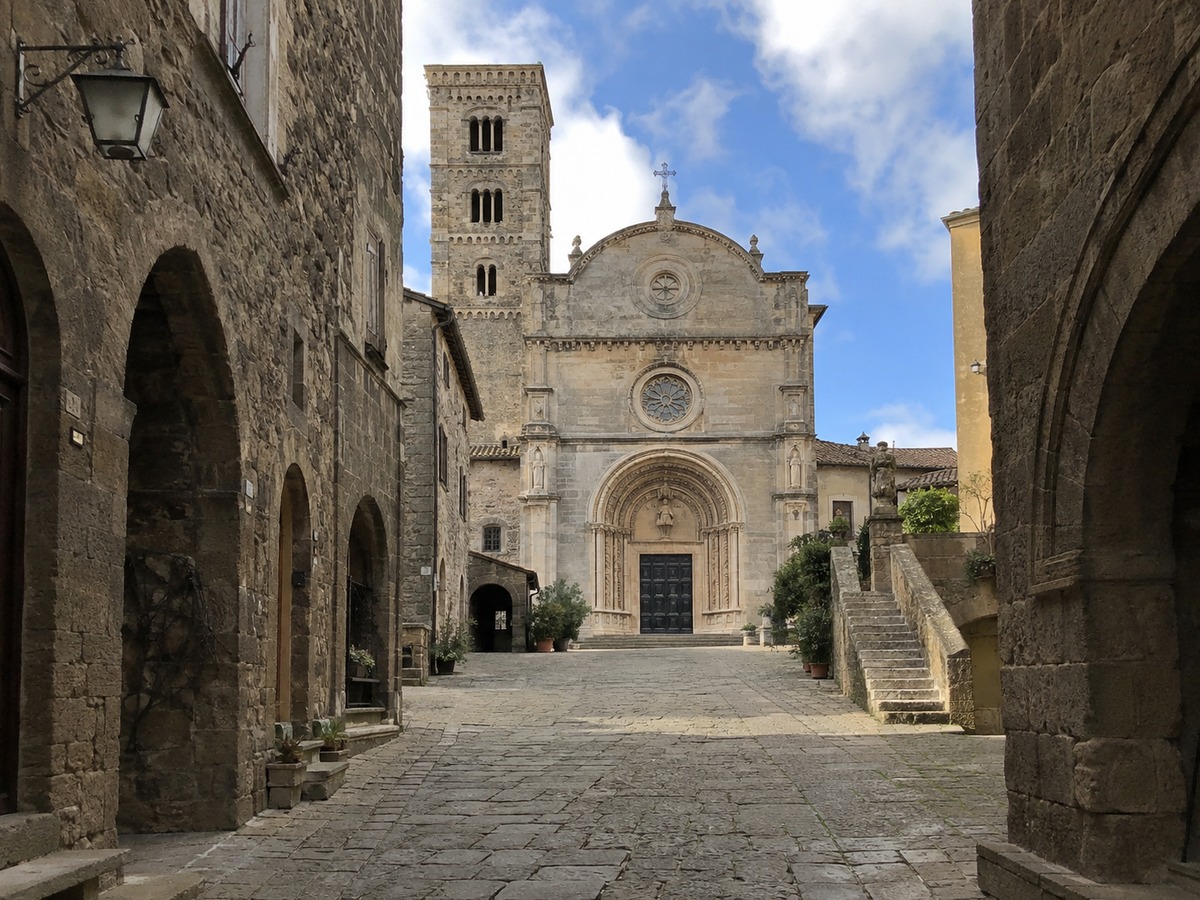
Acquapendente: the Via Francigena and the Basilica del Santo Sepolcro
A border town along the Via Francigena, with a medieval basilica and a crypt echoing the Holy Sepulchre in Jerusalem.
Read more →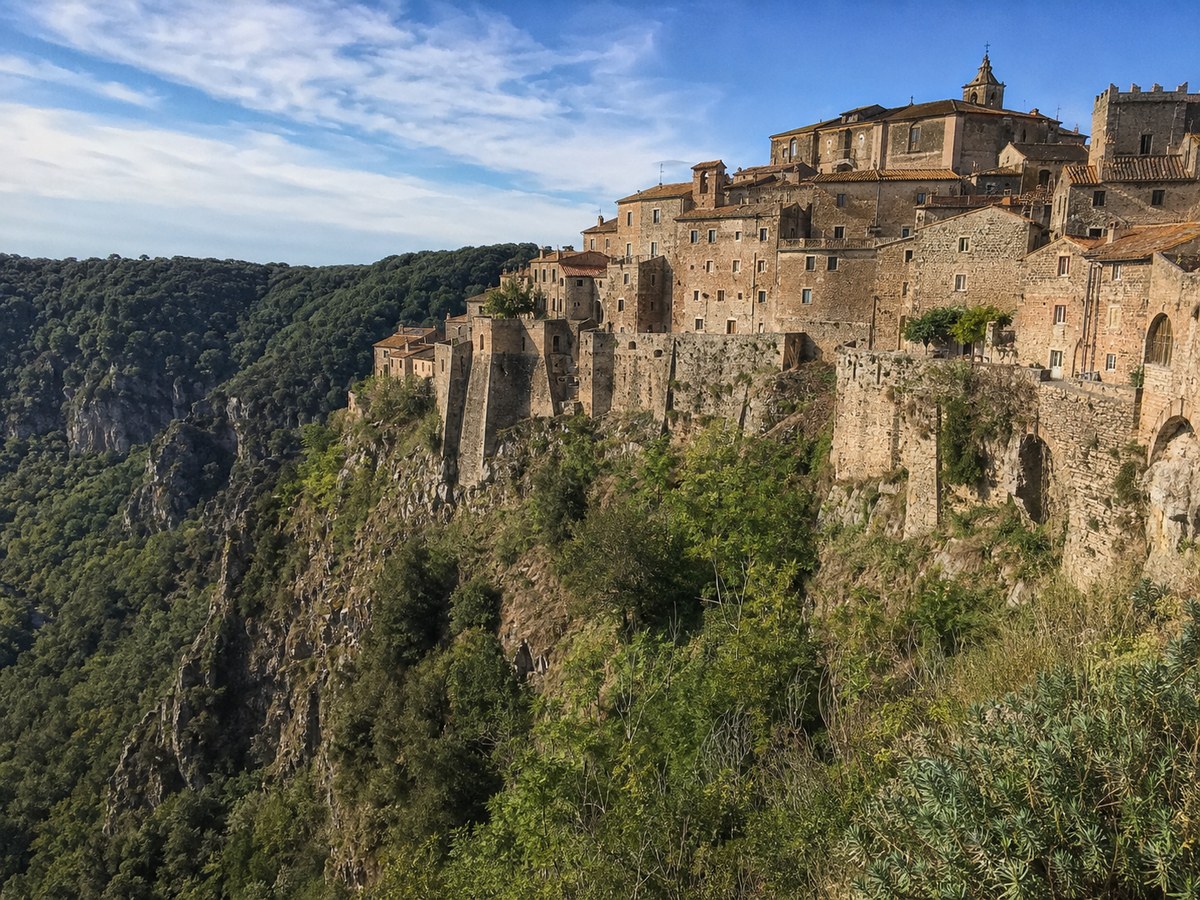
Barbarano Romano: the medieval village above the Marturanum ravines
A small fortified town overlooking the ravines, the gateway to the Marturanum Reserve and the Etruscan necropolis of San Giuliano.
Read more →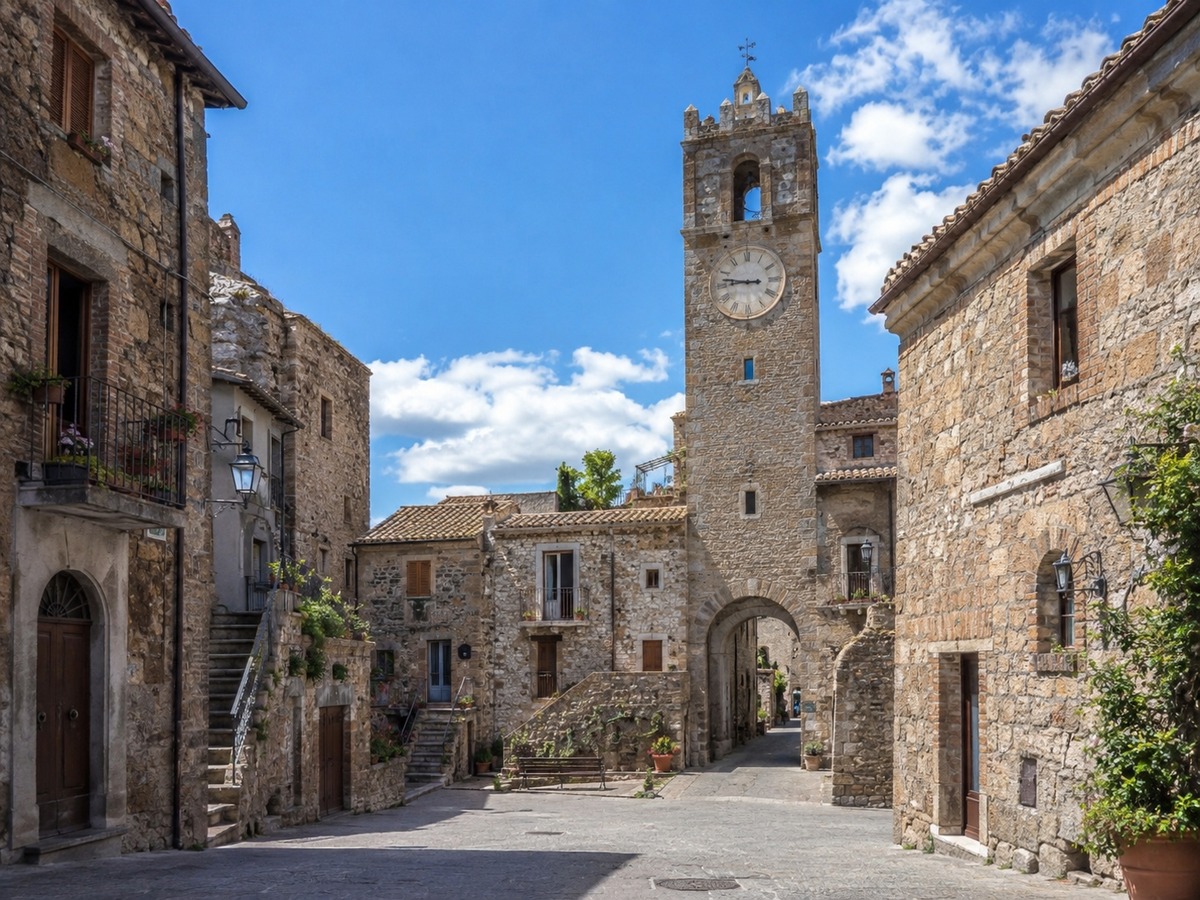
Bassano in Teverina: the rediscovered village and its Clock Tower
A small town overlooking the Tiber valley, restored after decades of abandonment and dominated by a tower that hides a medieval bell tower.
Read more →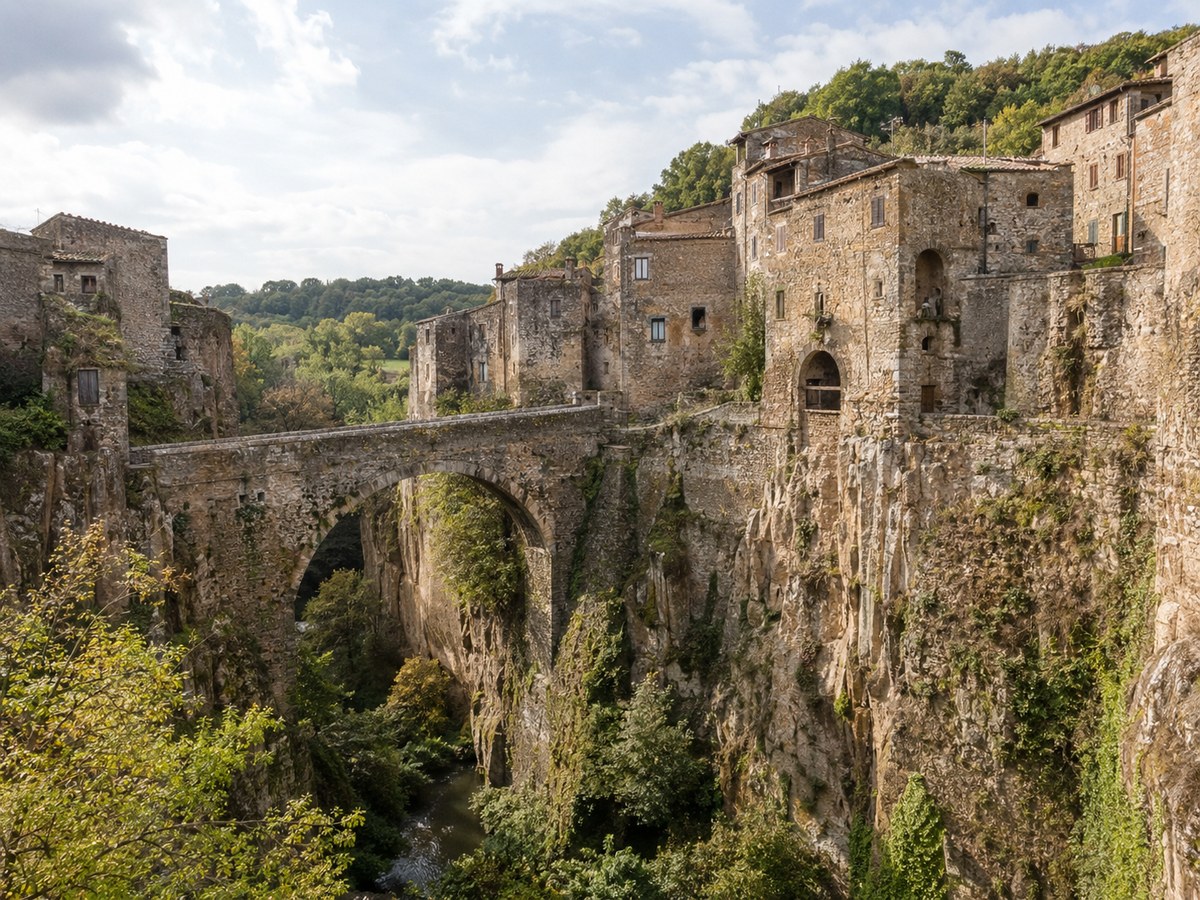
Blera: the village among ravines, ancient bridges and the Via Clodia
A tuff-stone town suspended between ravines and necropolises, where the ancient Via Clodia meets bridges, trails and a little-visited old centre.
Read more →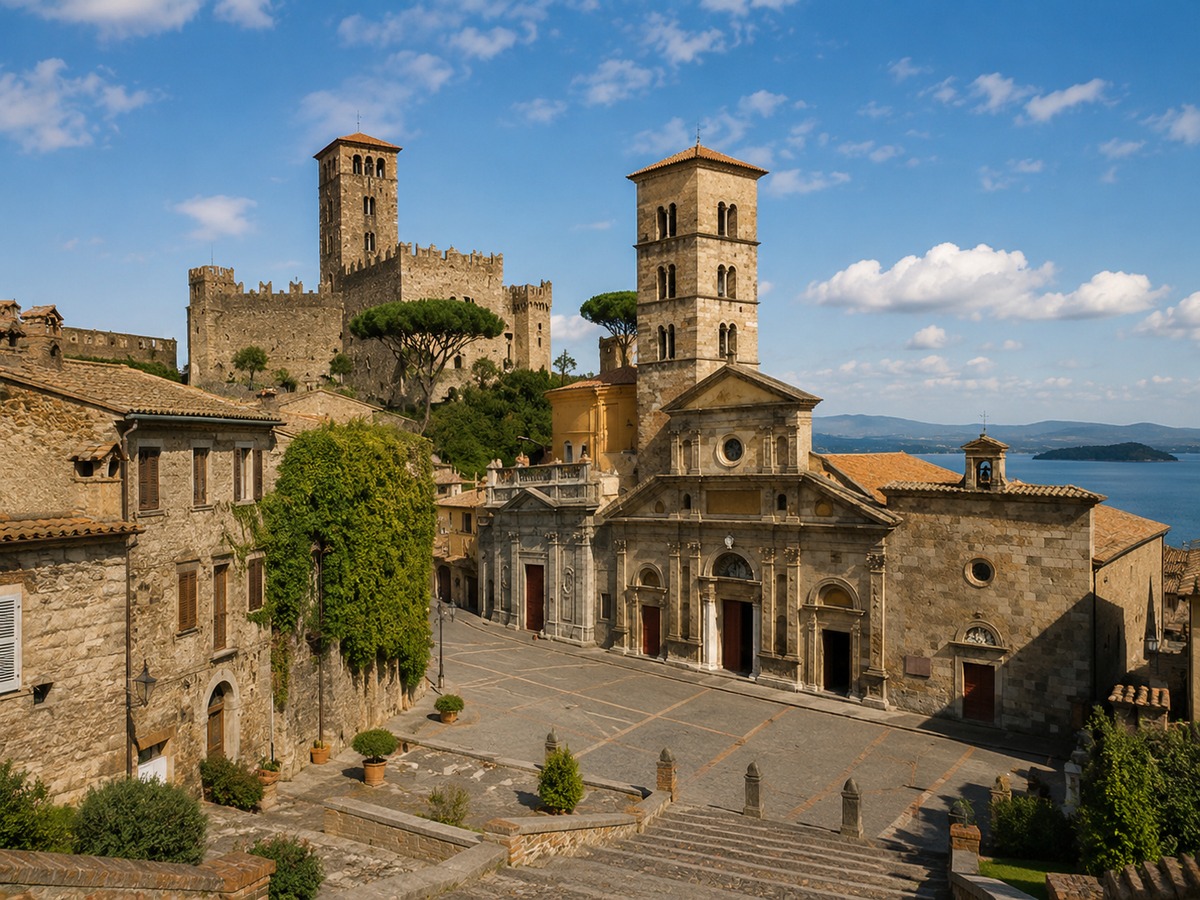
Bolsena: the medieval village, Rocca Monaldeschi and Santa Cristina
A village overlooking Europe's largest volcanic lake, between the Rocca Monaldeschi, medieval lanes and the Santa Cristina complex.
Read more →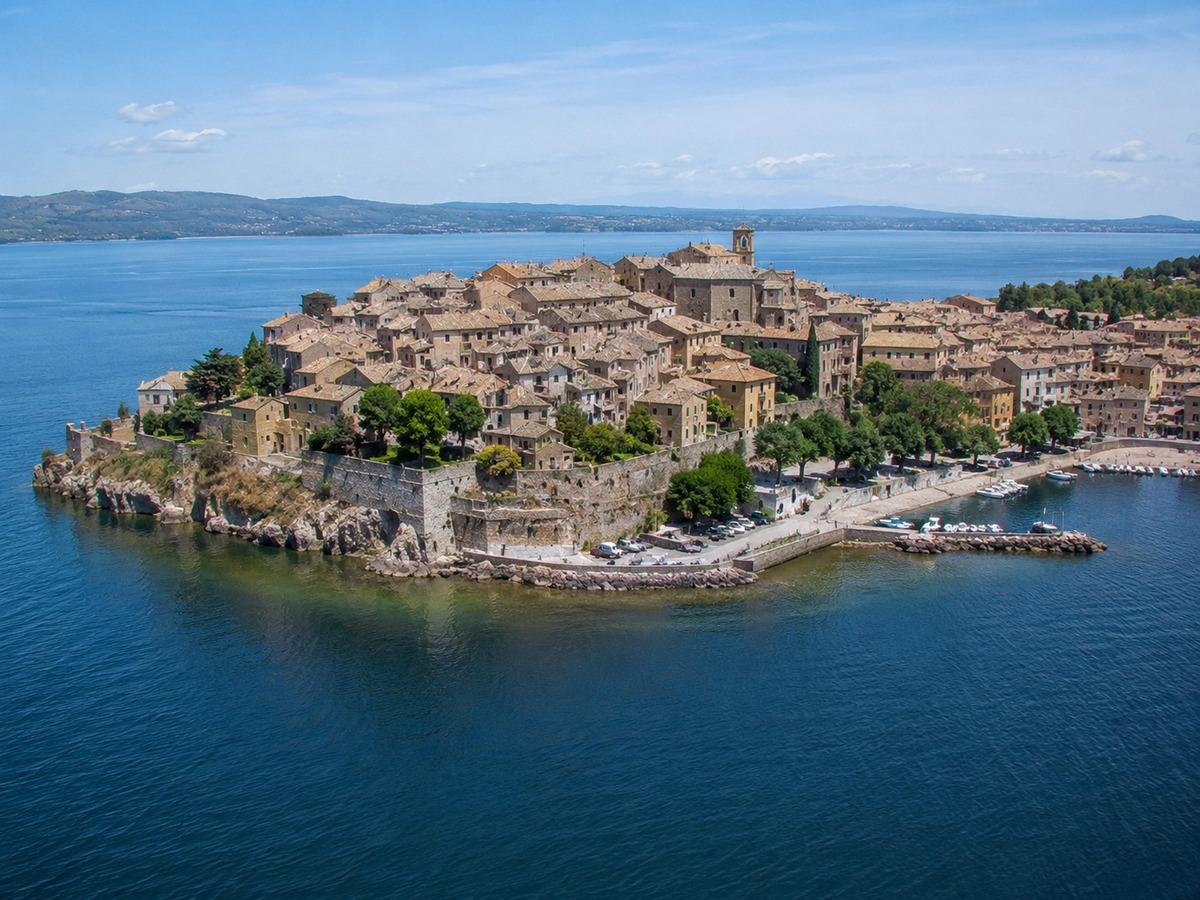
Capodimonte: the village on the Lake Bolsena promontory
A promontory reaching into Lake Bolsena, dominated by the Rocca Farnese and facing the islands of Bisentina and Martana.
Read more →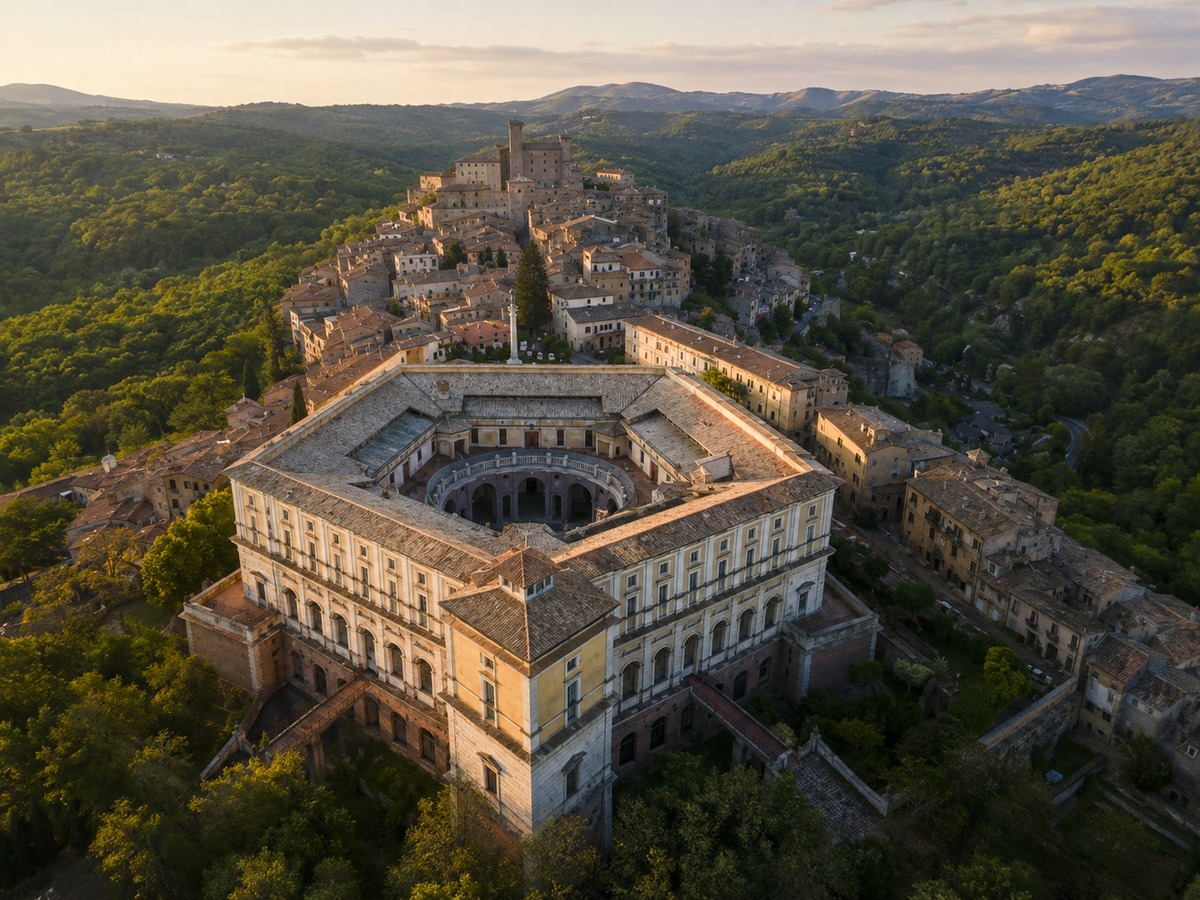
Caprarola: the Farnese village built around Palazzo Farnese
More than just the great palace: a long Renaissance street turns Caprarola into an urban stage set dominated by the Farnese residence.
Read more →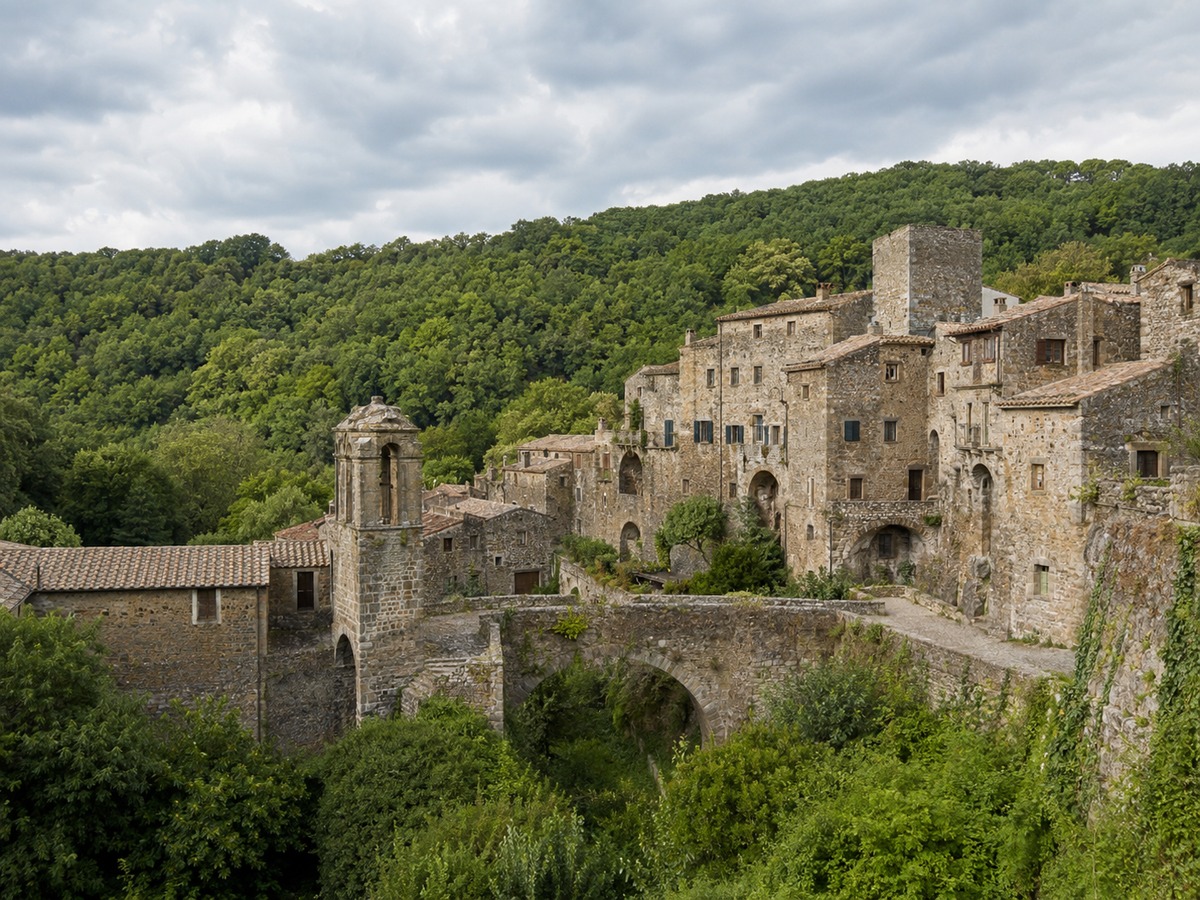
Farnese: the Farnese family village on the edge of the Selva del Lamone
A medieval town in Alta Tuscia bearing the Farnese family name, among stone lanes, palaces and the great forest of the Selva del Lamone.
Read more →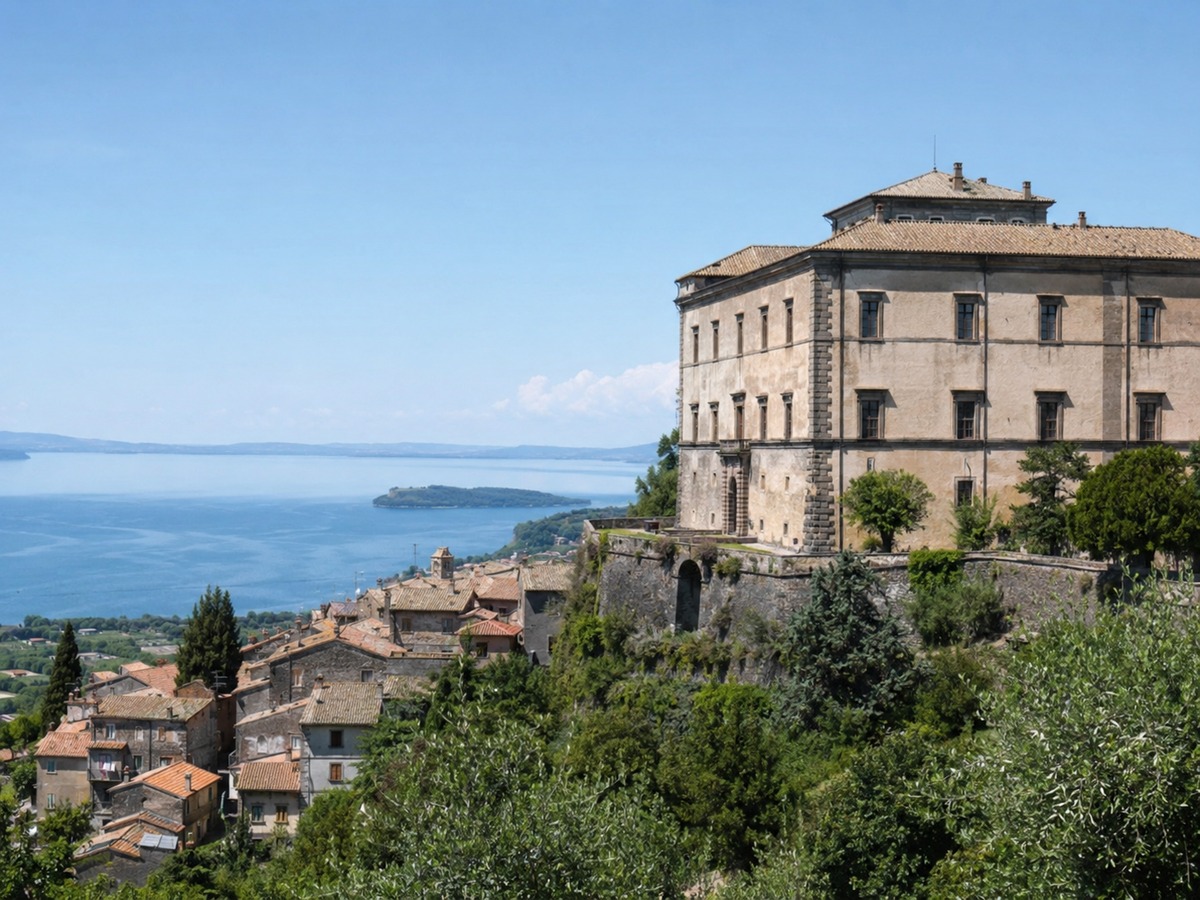
Gradoli: Palazzo Farnese and the village above Lake Bolsena
A small town on the hills above Lake Bolsena, dominated by Palazzo Farnese, among medieval lanes and memories of the powerful Renaissance family.
Read more →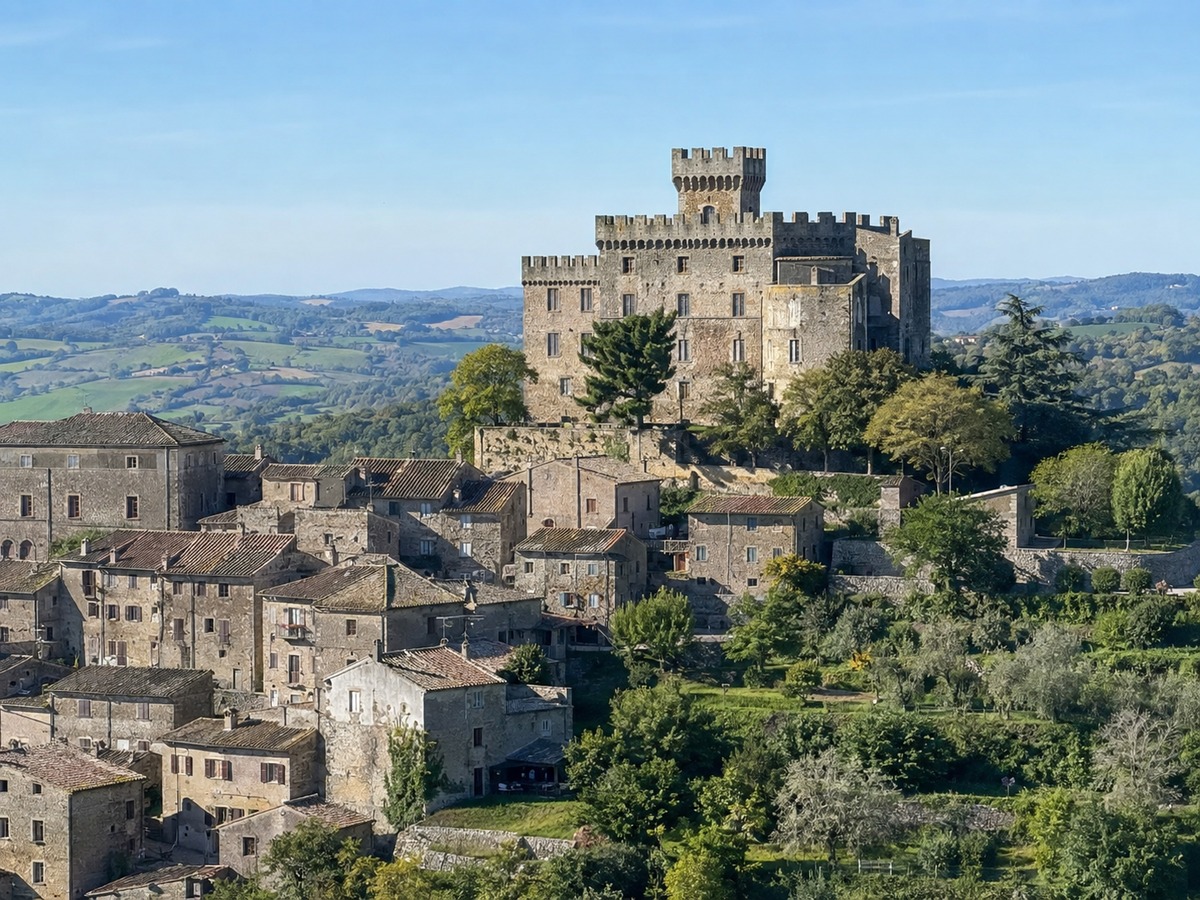
Graffignano: Castello Baglioni and the village of the Teverina
A medieval castle dominates this small town in the Teverina, among towers, stone houses and landscapes overlooking the Tiber valley.
Read more →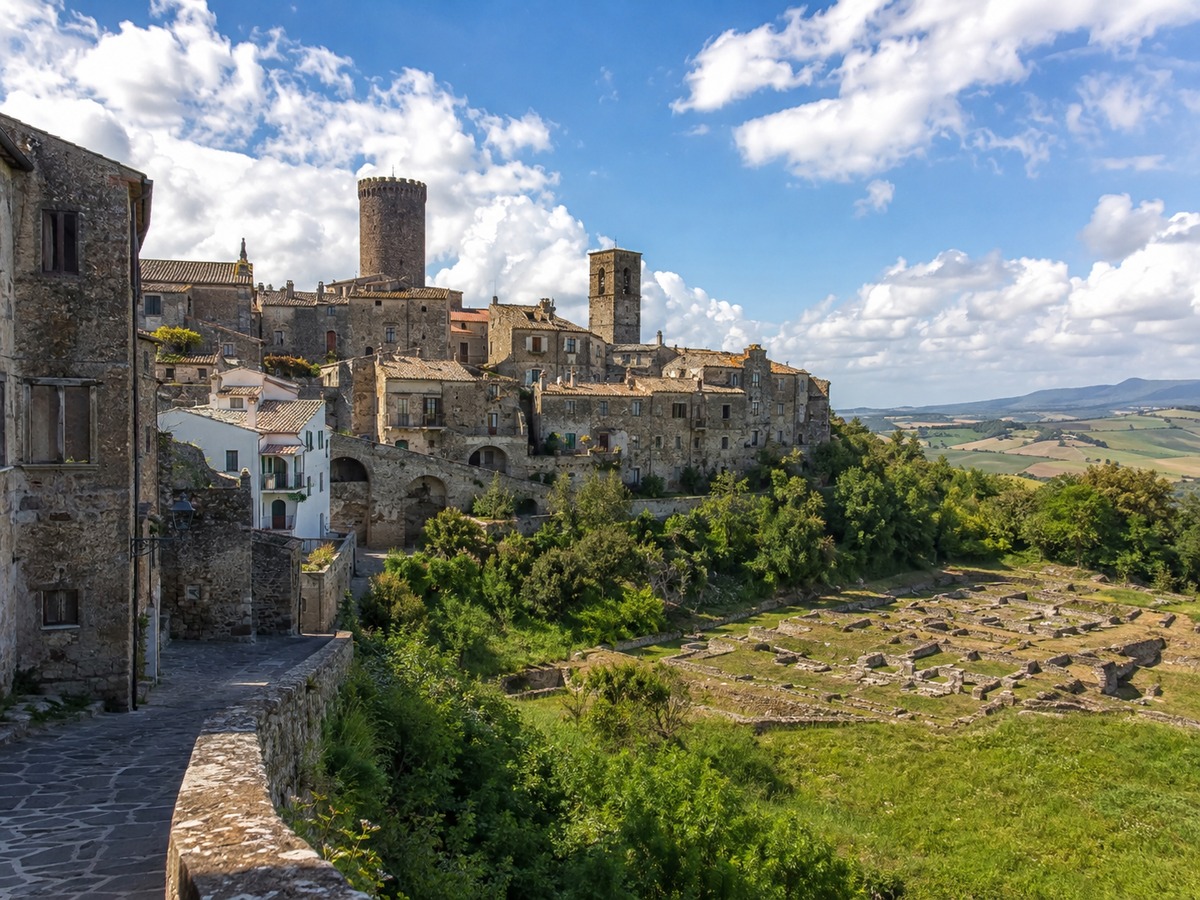
Ischia di Castro: the Farnese village and the gateway to the lost city of Castro
A town in Alta Tuscia tied to the Farnese family, and the starting point for exploring Etruscan archaeology and the ruins of the Duchy of Castro's capital.
Read more →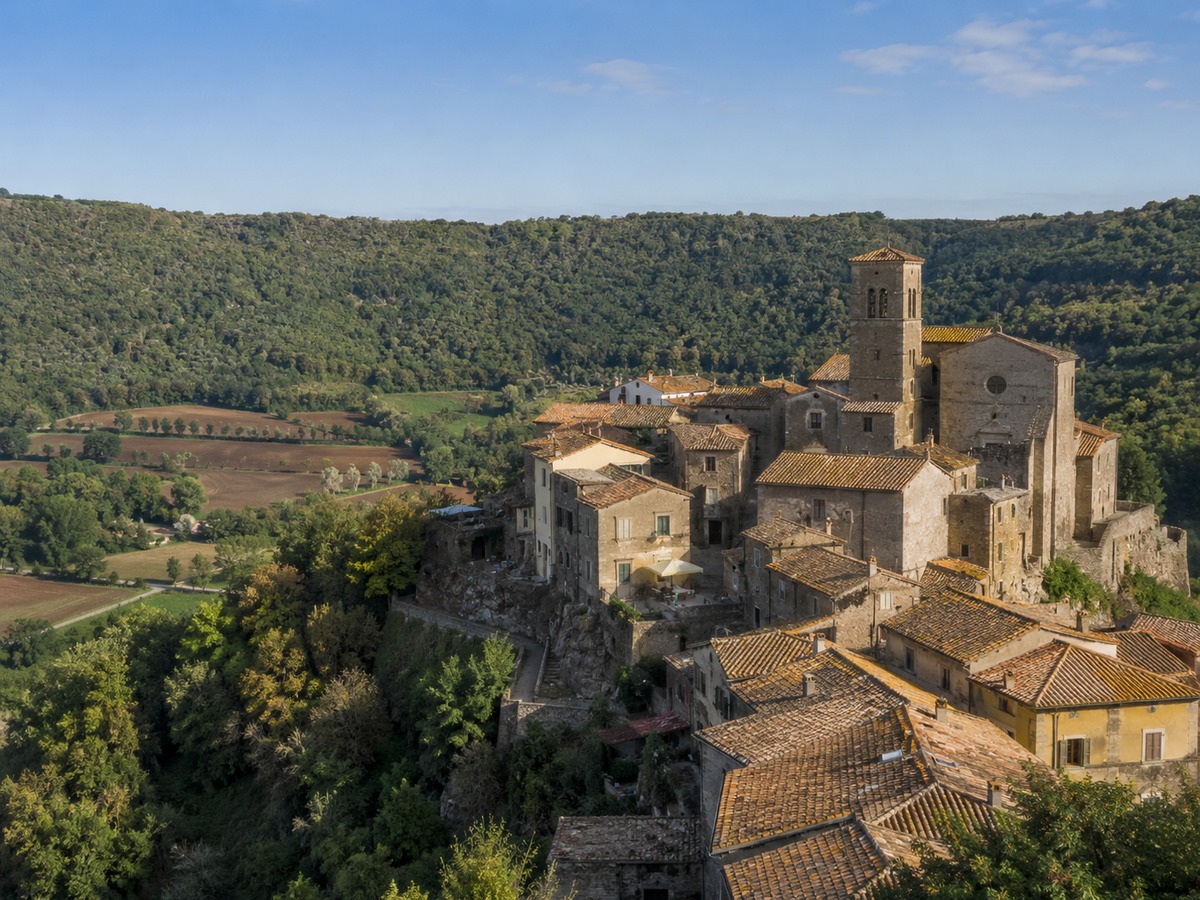
Latera: the medieval village inside the volcanic caldera
A tight-knit town in Alta Tuscia ringed by the volcanic hills of the Volsini, among medieval lanes, fountains and rural landscape.
Read more →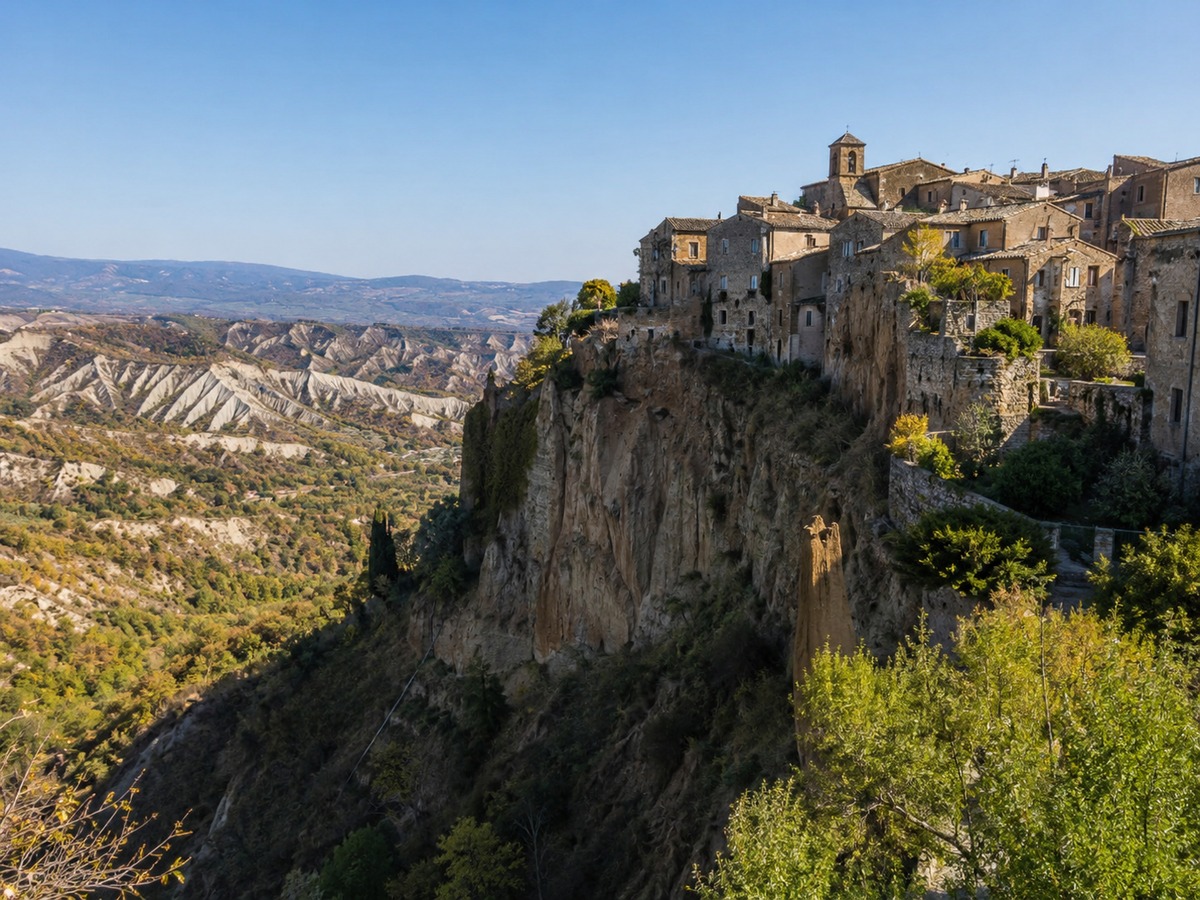
Lubriano: the balcony over the Valle dei Calanchi
A village looking directly over Civita di Bagnoregio and the Valle dei Calanchi, with one of Tuscia's most spectacular views.
Read more →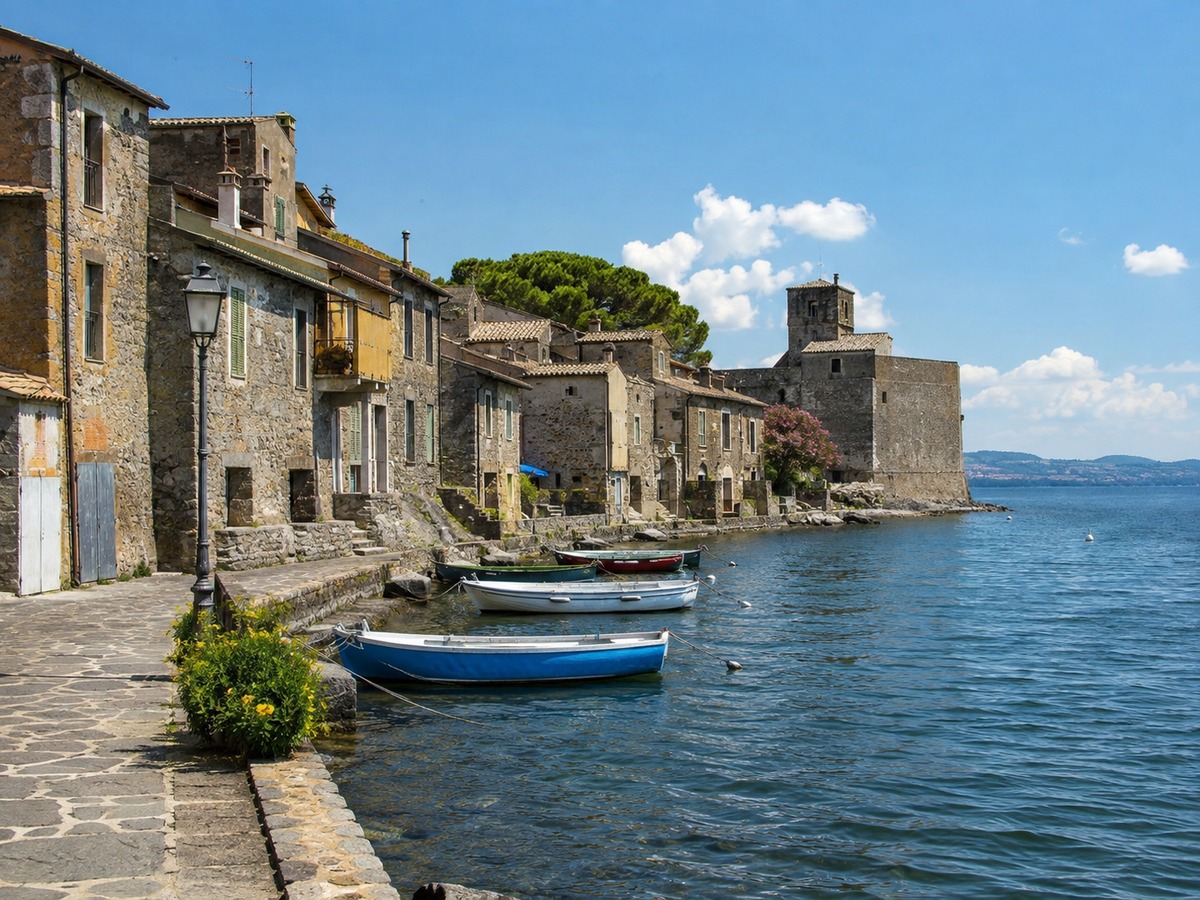
Marta: the fishing village on Lake Bolsena
Houses facing the water, boats, lanes and a panoramic tower: one of the villages most closely tied to Lake Bolsena's fishing tradition.
Read more →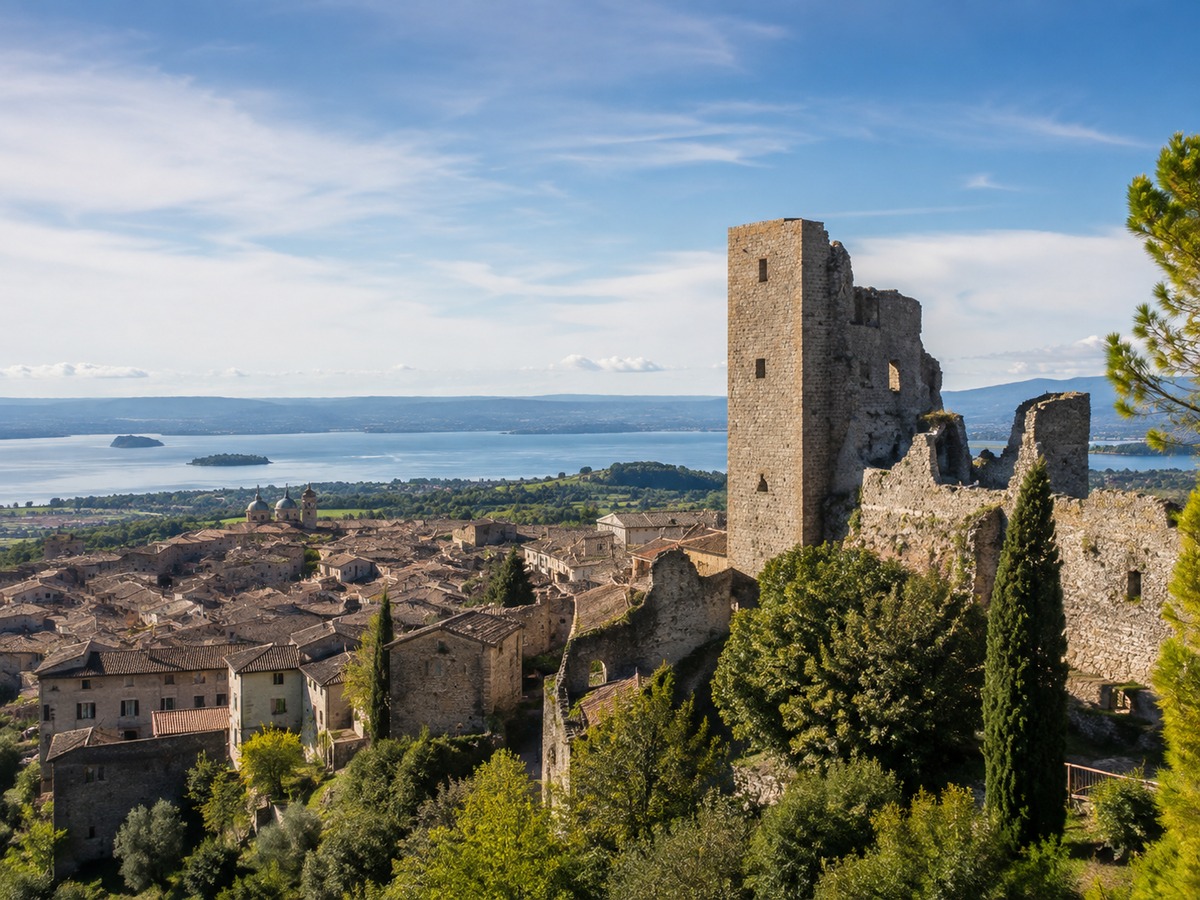
Montefiascone: the Rocca dei Papi and the village above Lake Bolsena
A medieval town atop the highest hill of the Monti Volsini, with views over Lake Bolsena, the Rocca dei Papi and the great dome of Santa Margherita.
Read more →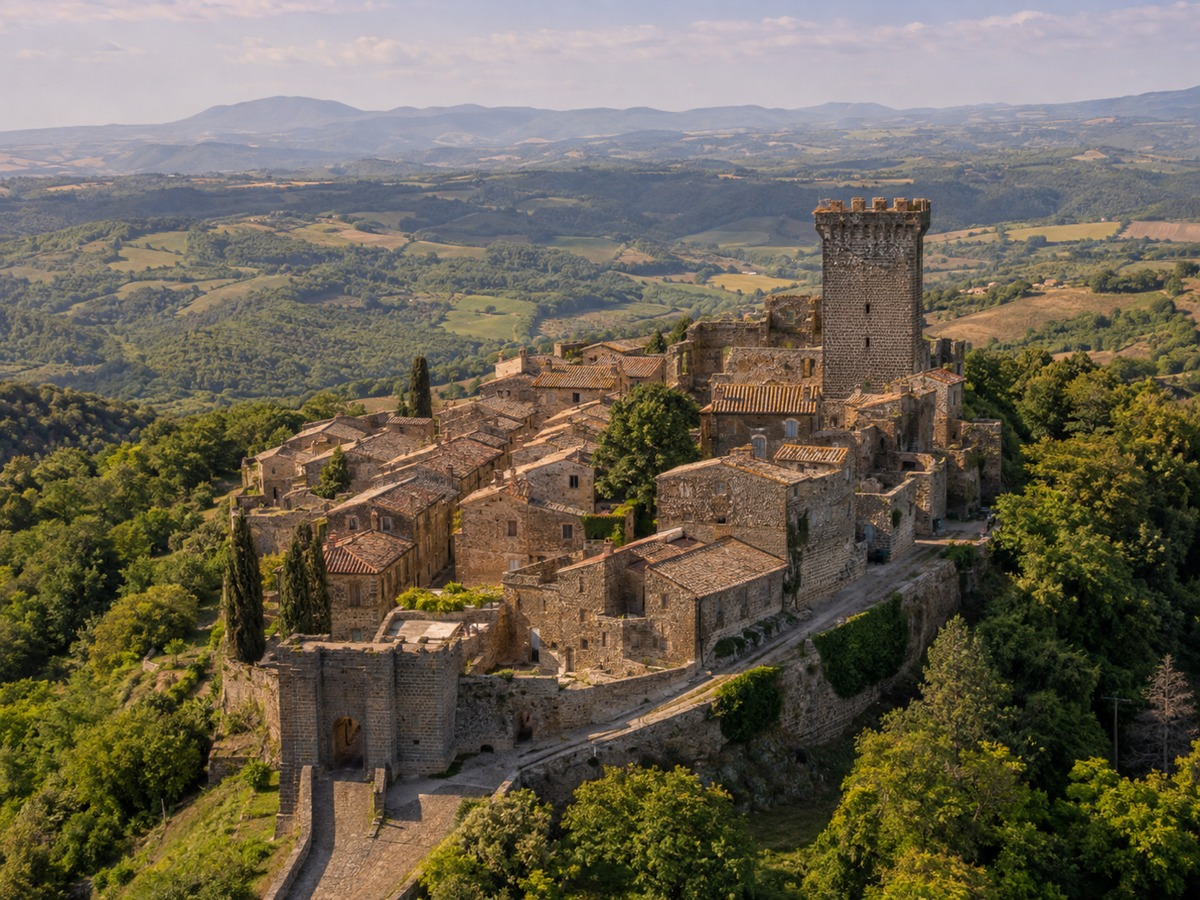
Proceno: the castle and village at Tuscia's northern edge
A small fortified village on the Via Francigena, dominated by a castle and overlooking the hills on the border between Lazio and Tuscany.
Read more →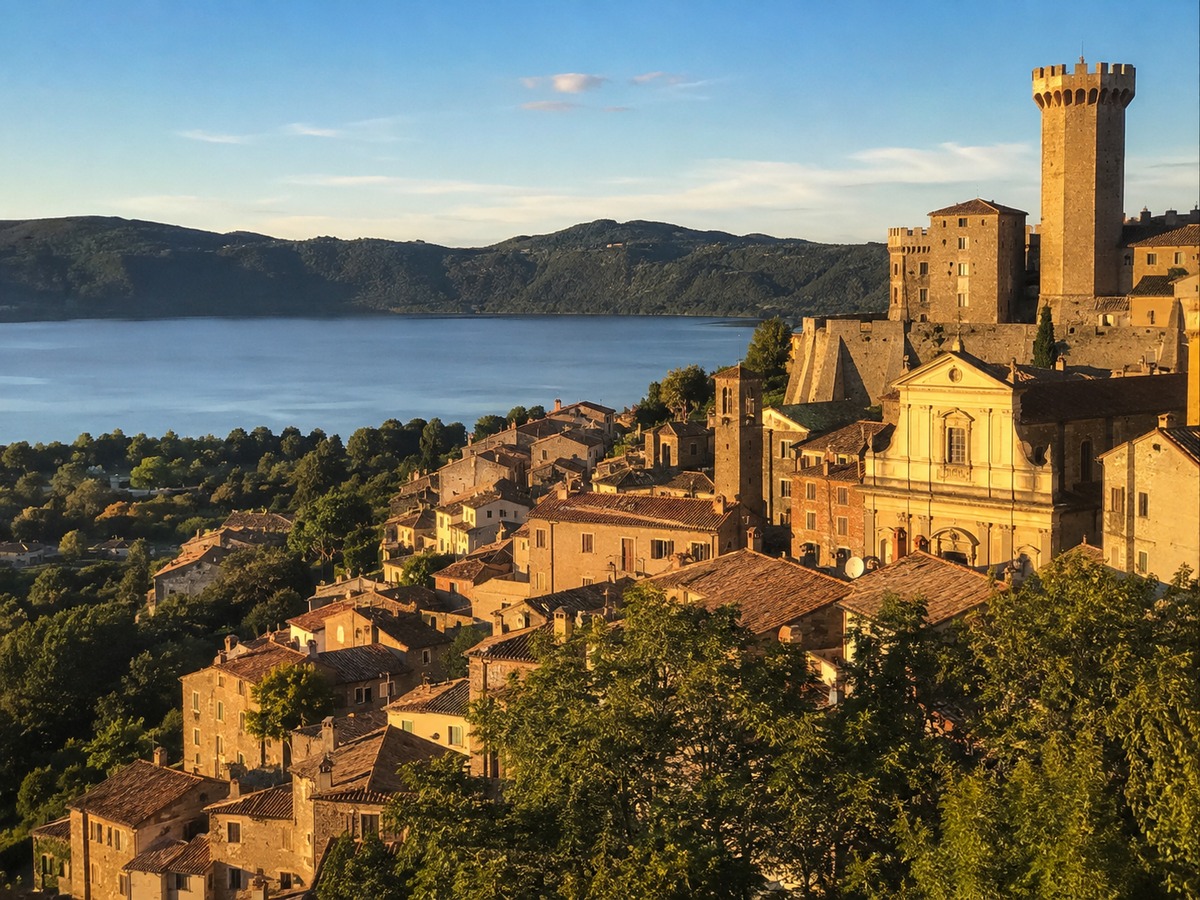
Ronciglione: the medieval village and the Farnese Renaissance streets
Towers, lanes, palaces and old workshops in a historic centre shaped by the Middle Ages, Farnese rule and Lake Vico.
Read more →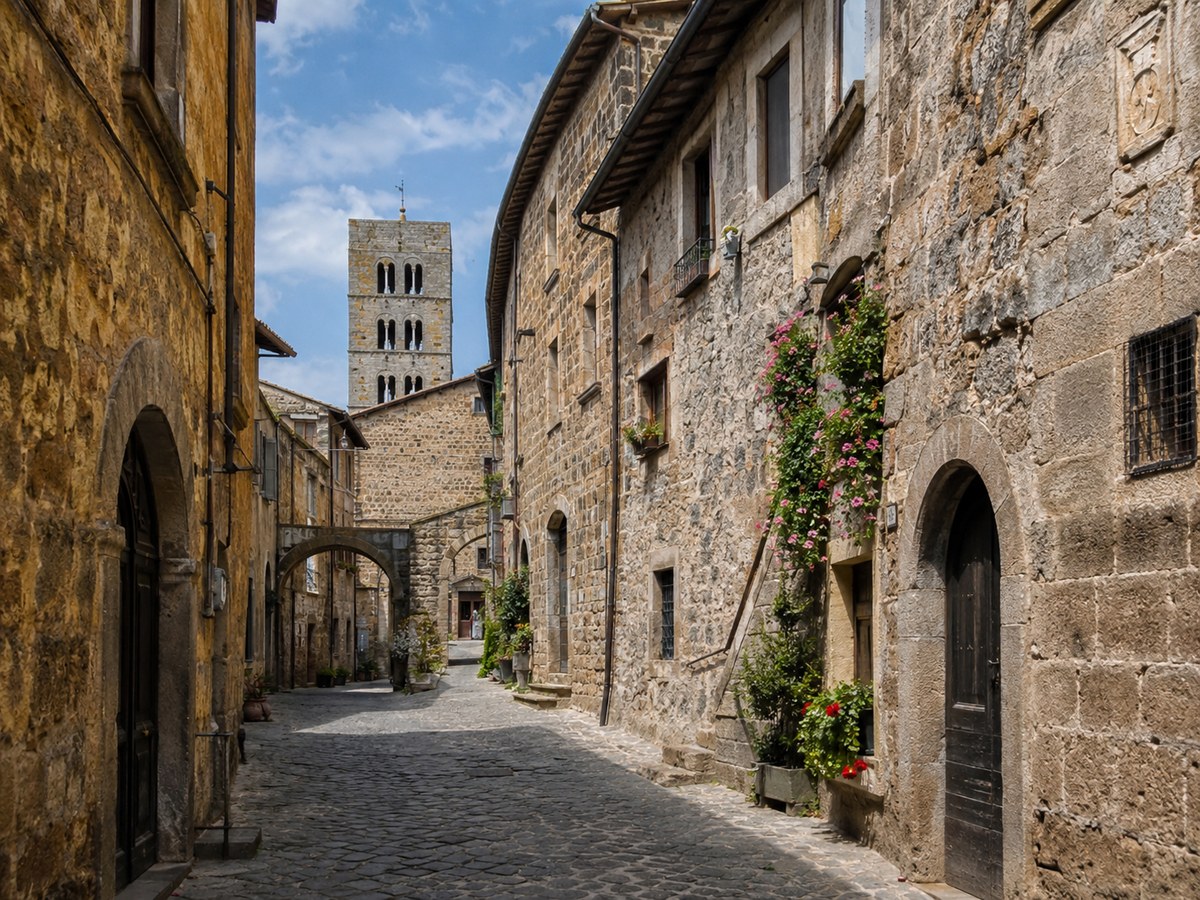
Vetralla: the historic centre on the Via Francigena
A Tuscia town along the ancient Via Cassia and the Via Francigena, among lanes, churches and landscapes of woods and olive groves.
Read more →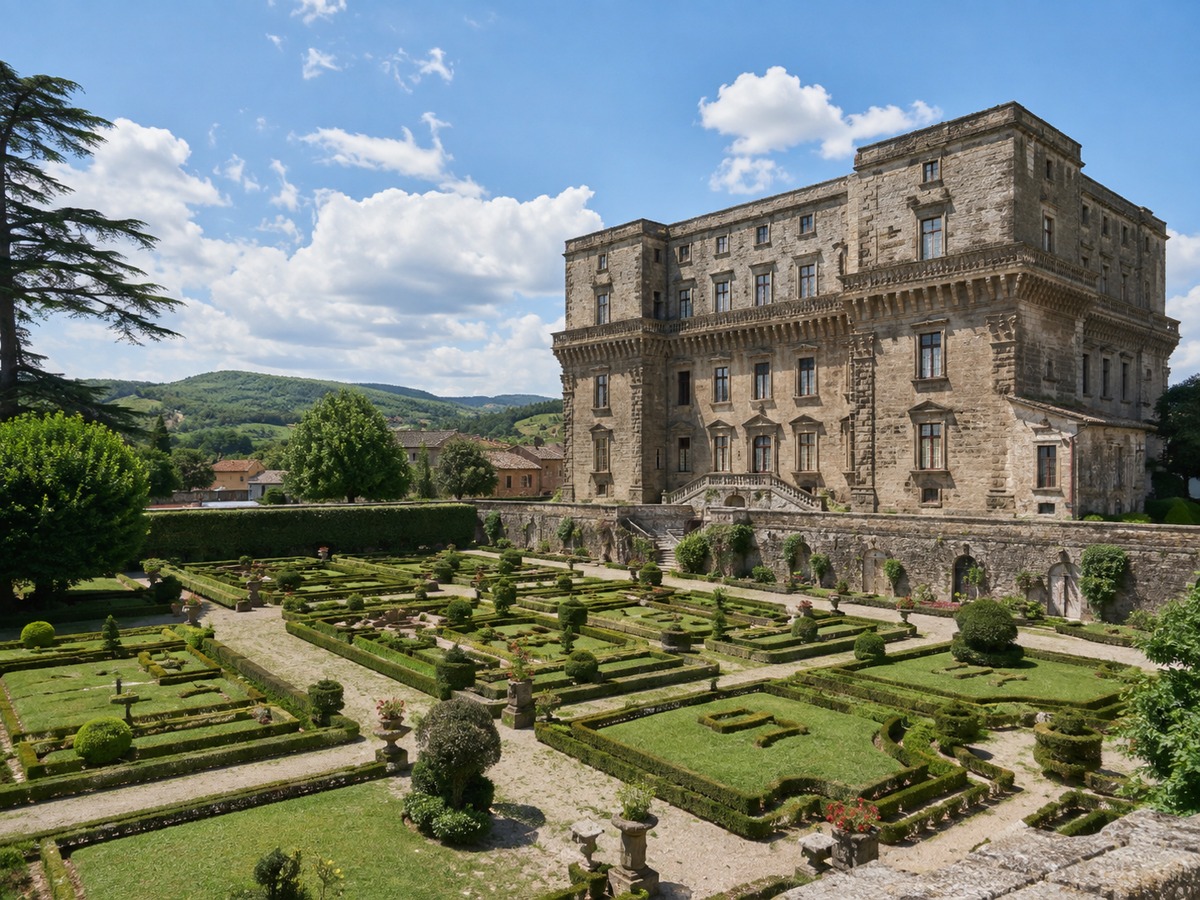
Vignanello: Castello Ruspoli and its Renaissance garden
A castle with four bastions and one of Tuscia's best-preserved Italian gardens, at the heart of a small Cimini village.
Read more →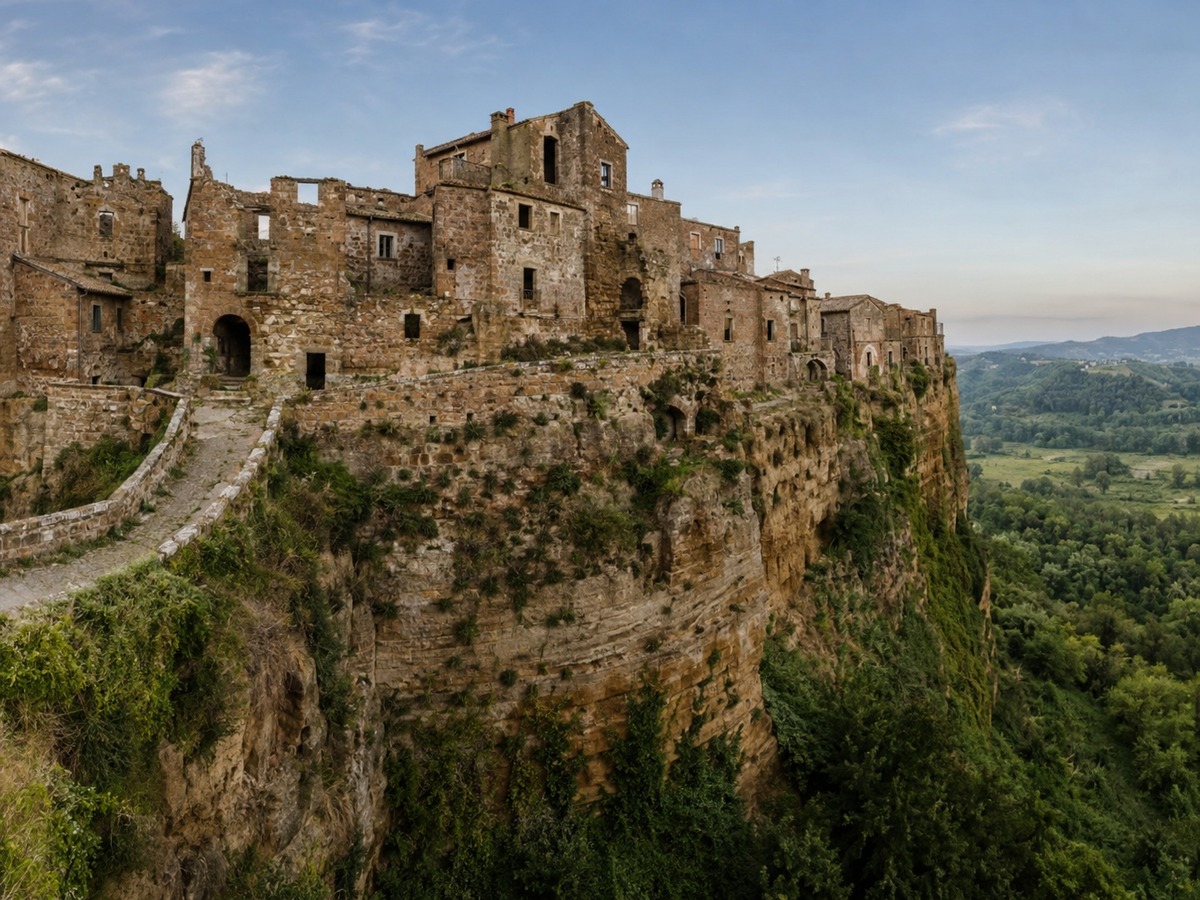
Celleno: the ghost village suspended above the Tiber valley
Tuff houses, ruins and the Castello Orsini in an old settlement gradually abandoned in the 20th century due to an unstable cliff.
Read more →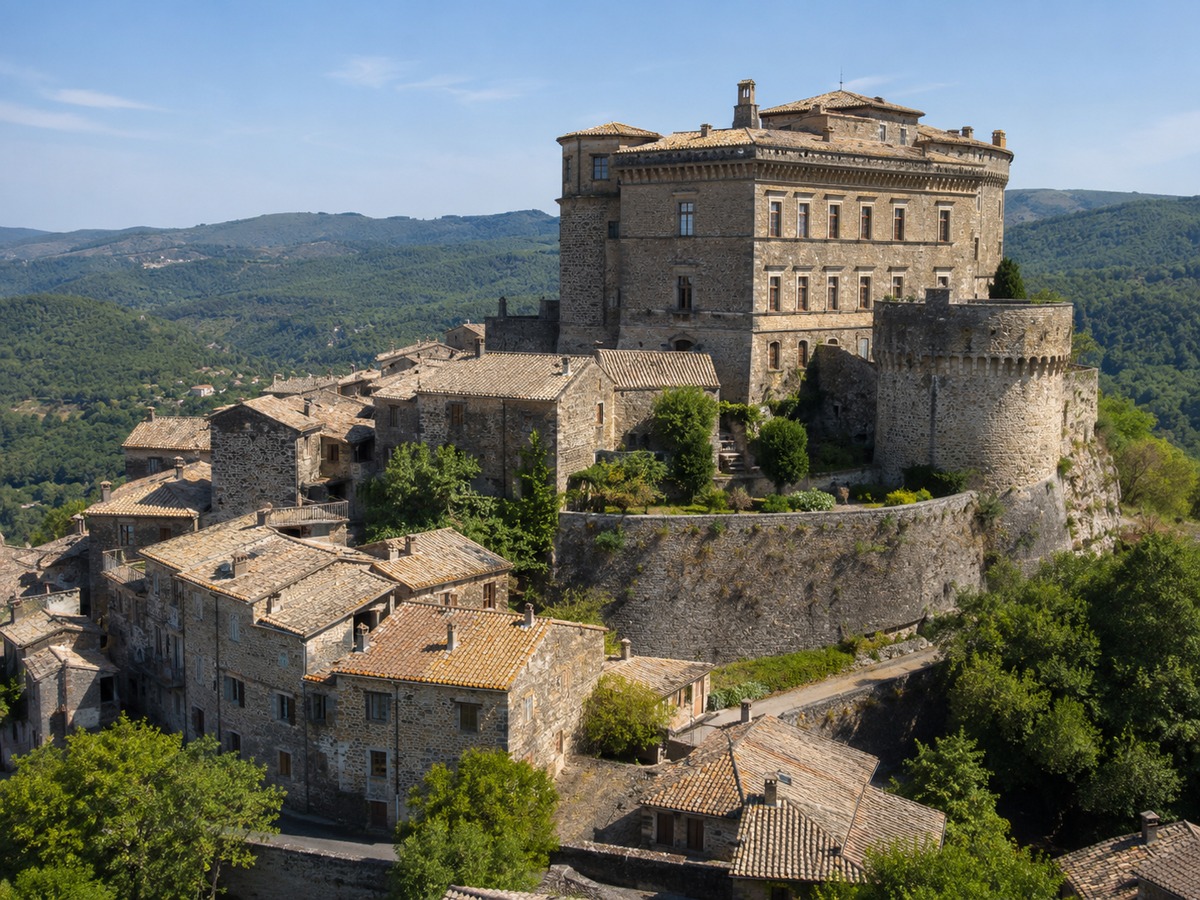
Roccalvecce: the medieval village and Castello Costaguti
A small fortified hamlet in the Teverina, dominated by Castello Costaguti and a stone old town that has stayed off the main tourist routes.
Read more →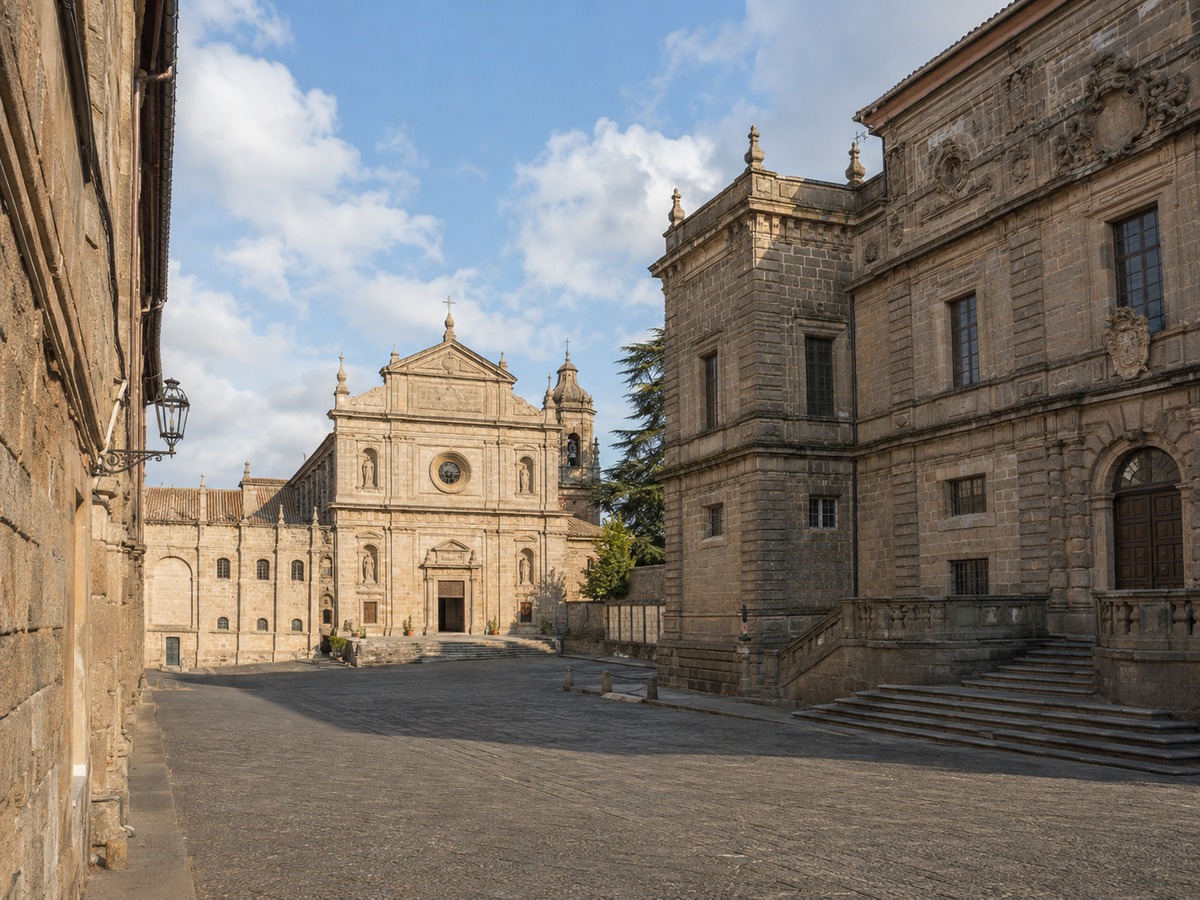
San Martino al Cimino: the Cistercian abbey and Palazzo Doria Pamphilj
A village that grew around a medieval abbey and was redesigned in the 17th century by Olimpia Maidalchini Pamphilj, with a palace, terraced houses and urban vistas.
Read more →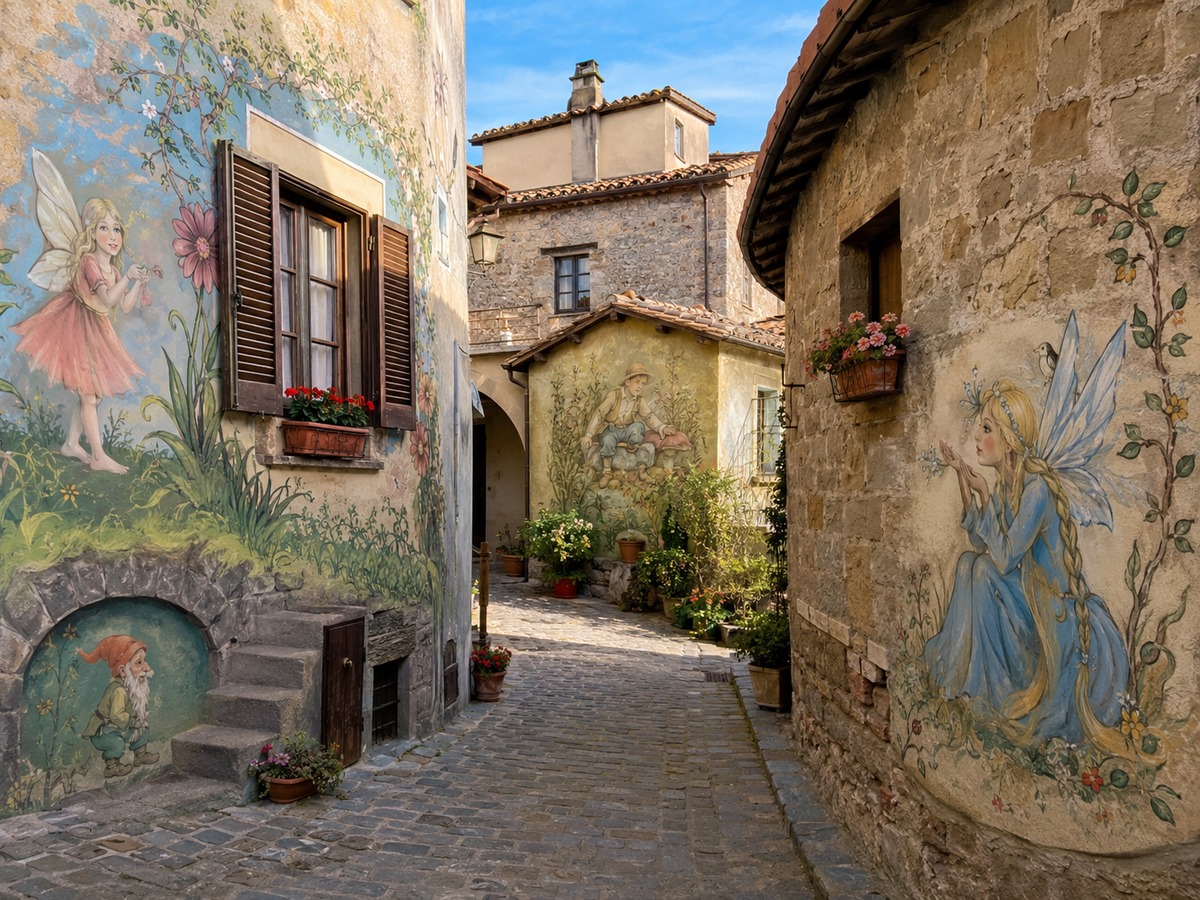
Sant'Angelo di Roccalvecce: the Fairy-Tale Village painted on its walls
A small hamlet in the Teverina transformed by street art: dozens of murals inspired by Alice, Pinocchio, Peter Pan and other classic children's tales.
Read more →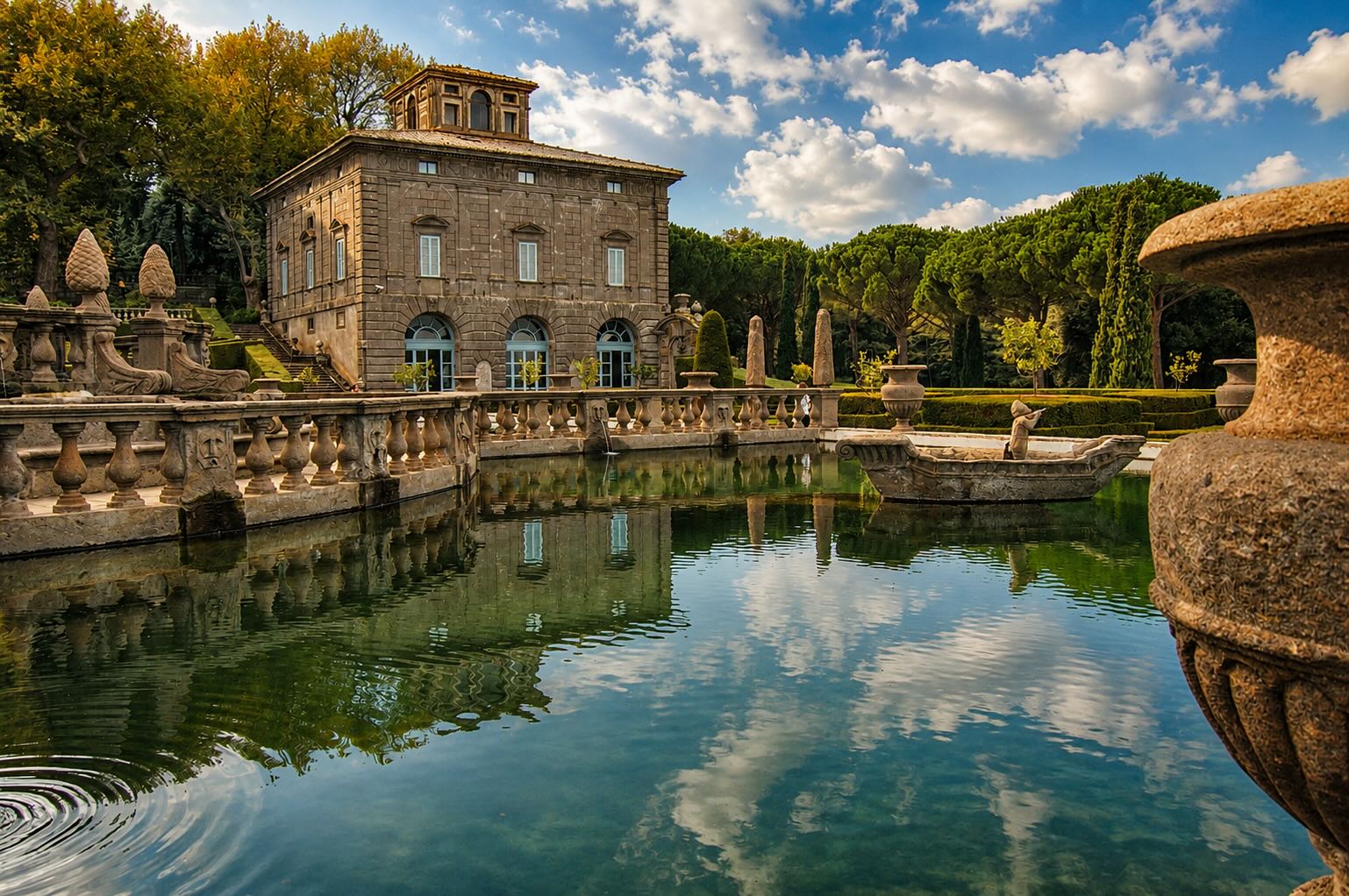
Villa Lante in Bagnaia: the Italian garden designed by Vignola
Fountains, water features and a Renaissance stage design that ranks among Italy's most celebrated gardens.
Read more →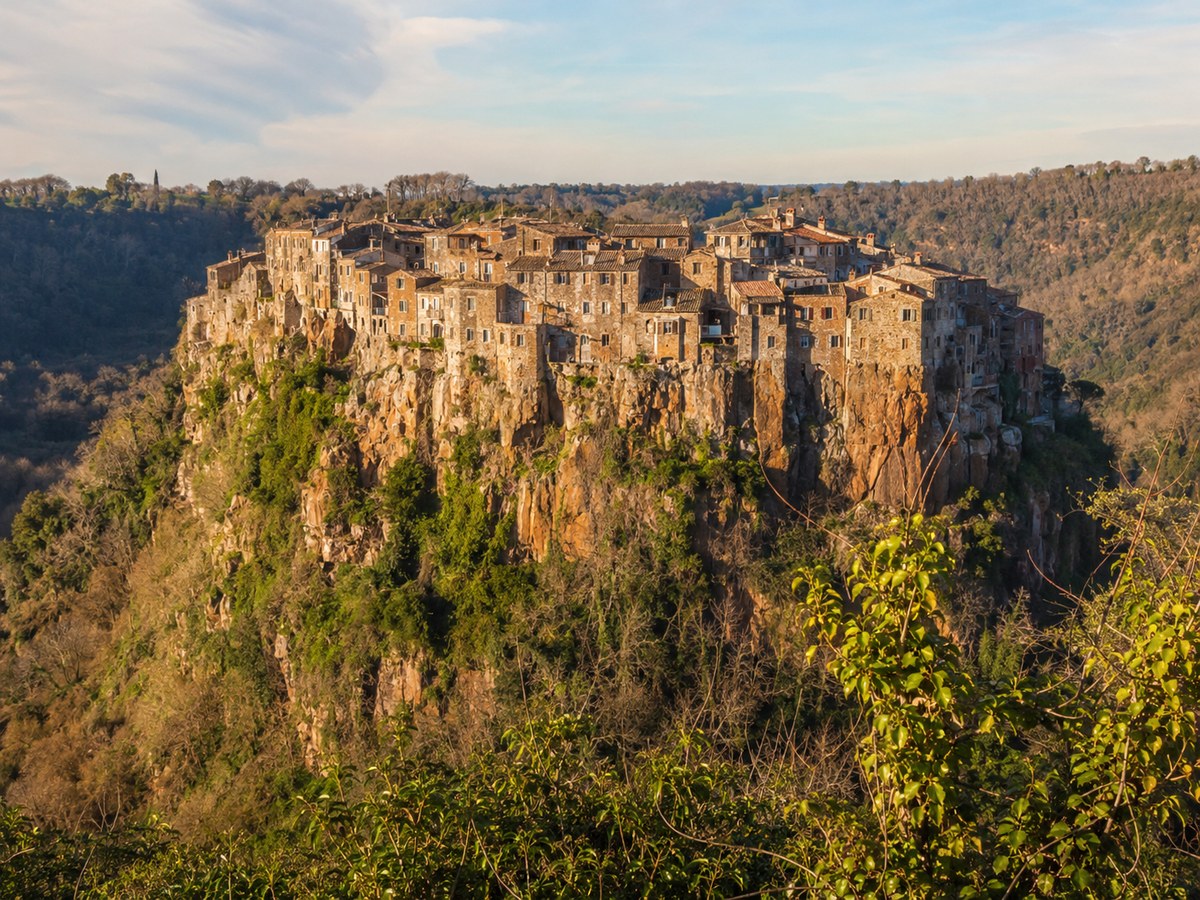
Calcata: the artists' village on a tuff outcrop
Saved from abandonment in the 1960s-70s by a community of artists, today one of Lazio's most photographed villages.
Read more →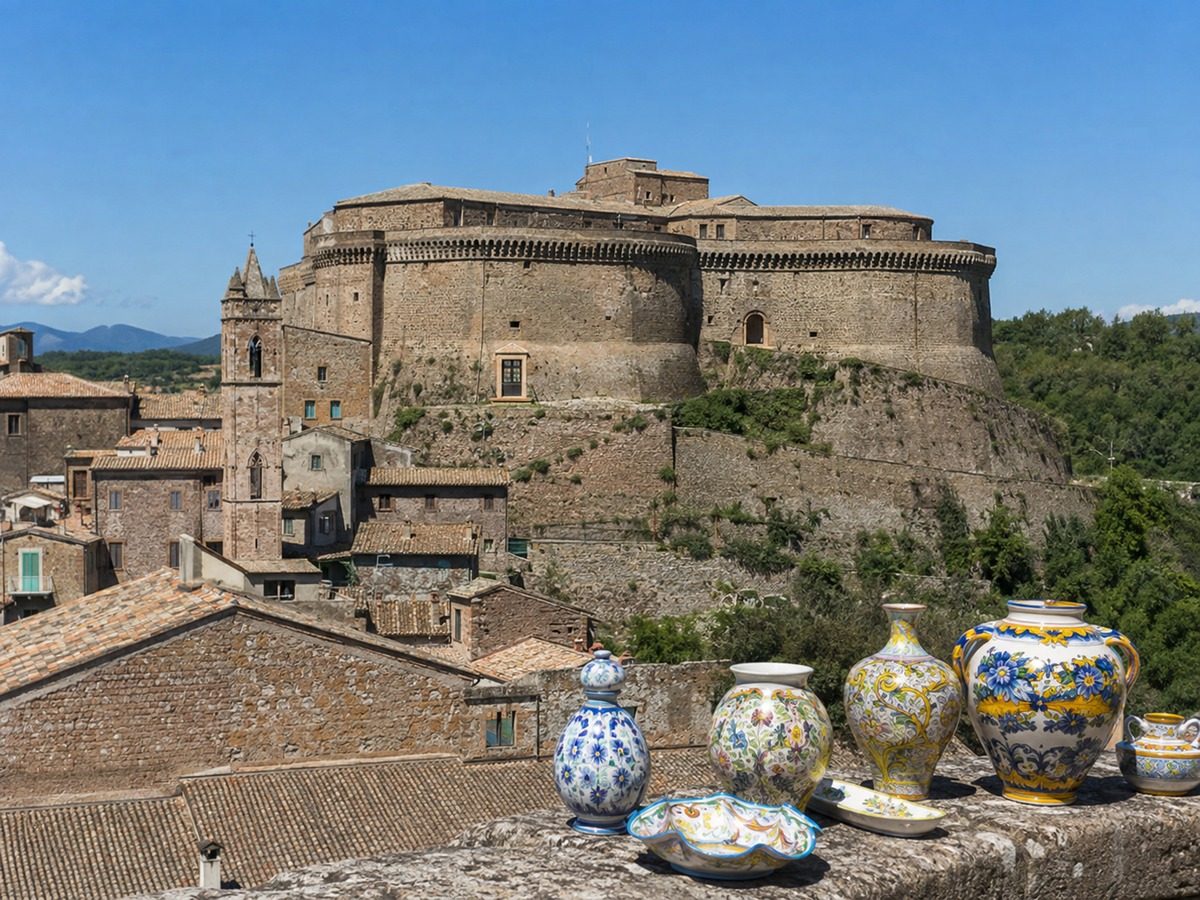
Civita Castellana: Forte Sangallo and a centuries-old ceramics tradition
Papal military architecture, a Romanesque cathedral with Cosmatesque floors, and centuries of ceramic craftsmanship.
Read more →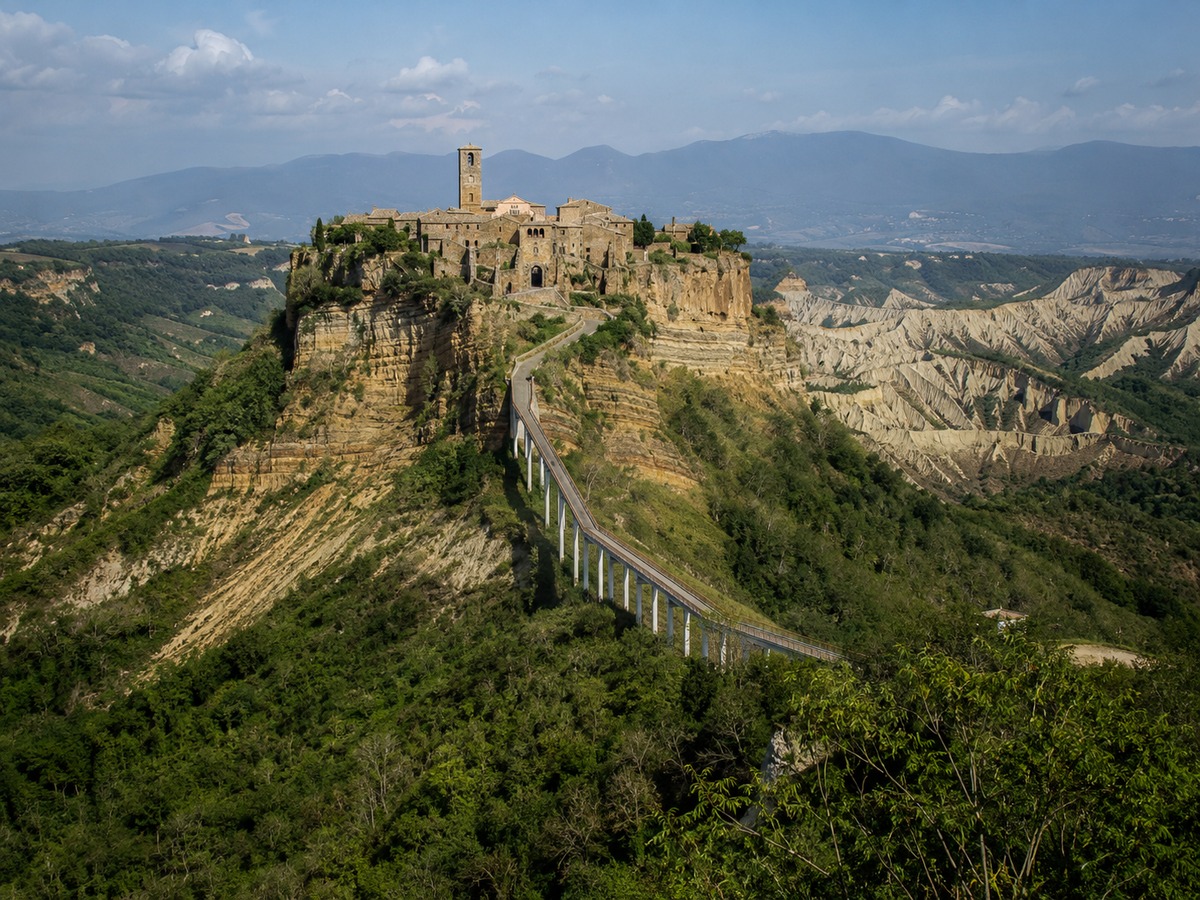
Civita di Bagnoregio: "the dying town"
A medieval village isolated on a clay outcrop, connected to the world by a single pedestrian bridge.
Read more →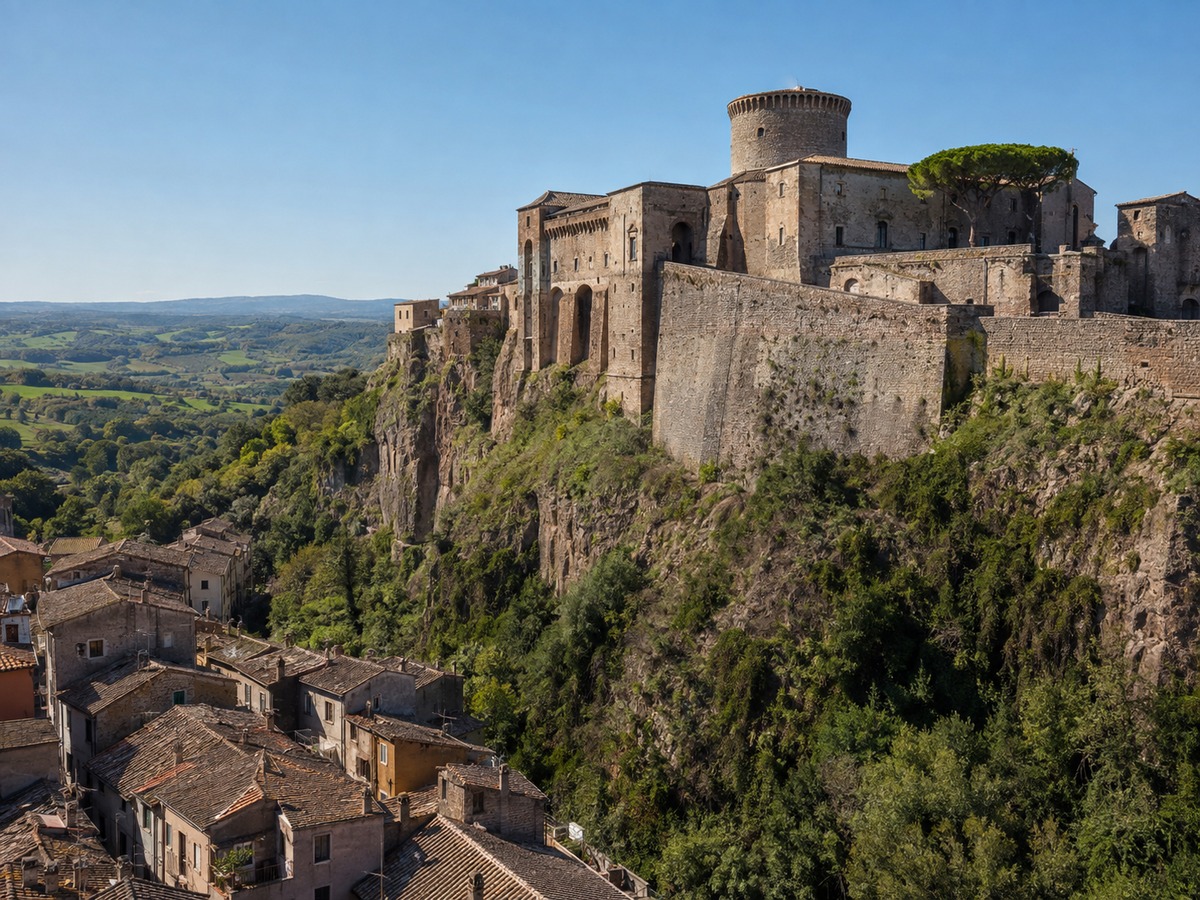
Nepi: the Borgia fortress designed by Sangallo the Elder
A village fought over for centuries by Lazio's great families, with a still-imposing Renaissance fortress.
Read more →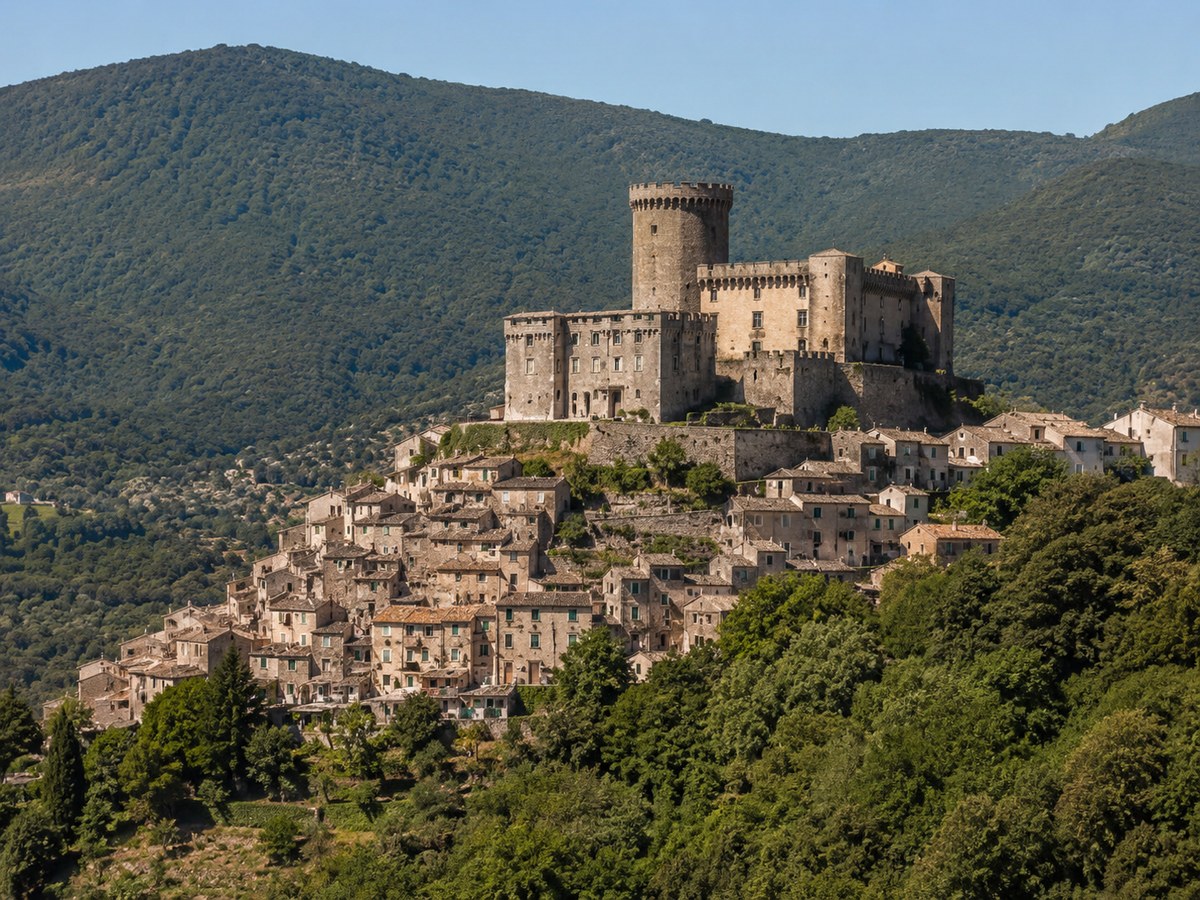
Soriano nel Cimino: the Orsini castle and the beech forests
A Renaissance village at the foot of Monte Cimino, between a 14th-century castle and a centuries-old beech forest.
Read more →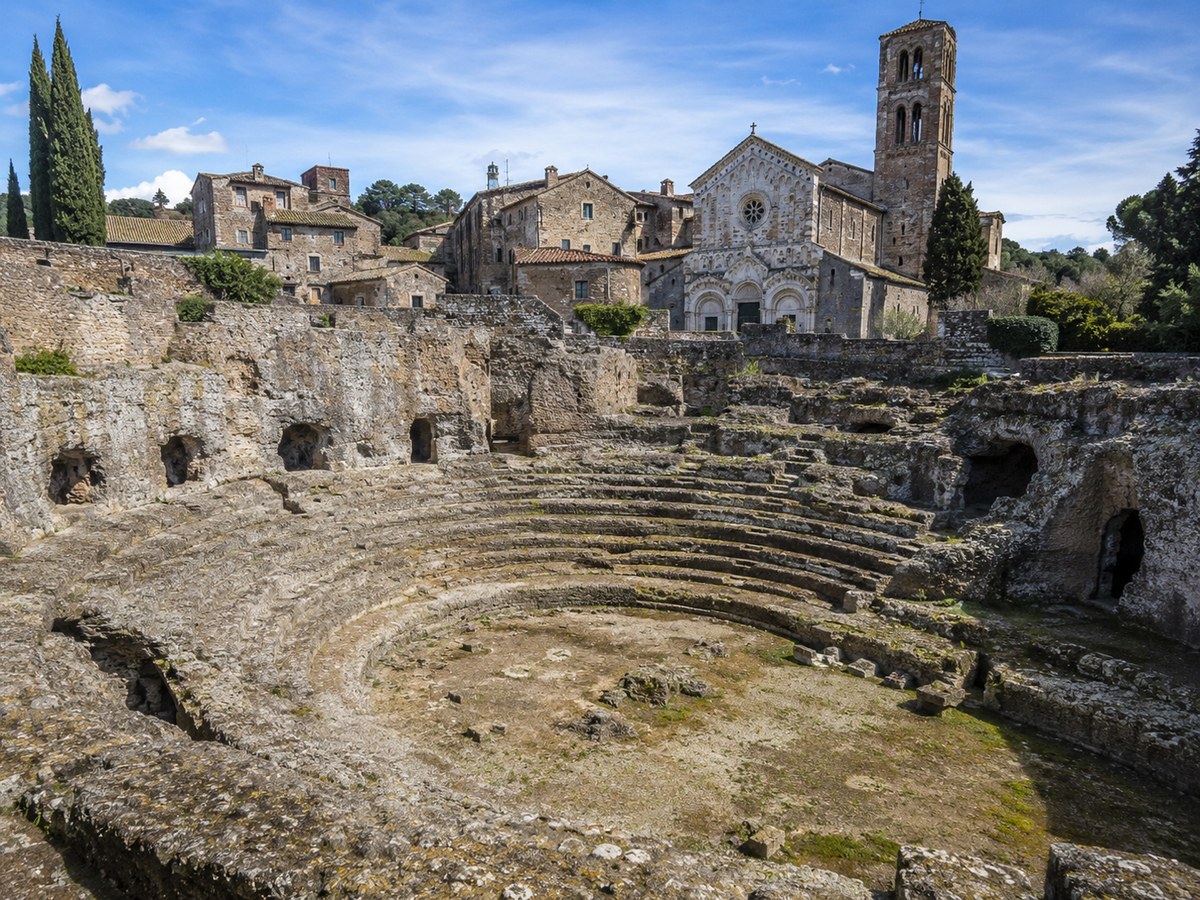
Sutri: the amphitheatre carved from tuff and the Cosmatesque cathedral
The gateway to Lower Tuscia from Rome, with Etruscan, Roman and medieval layers packed into a few hundred metres.
Read more →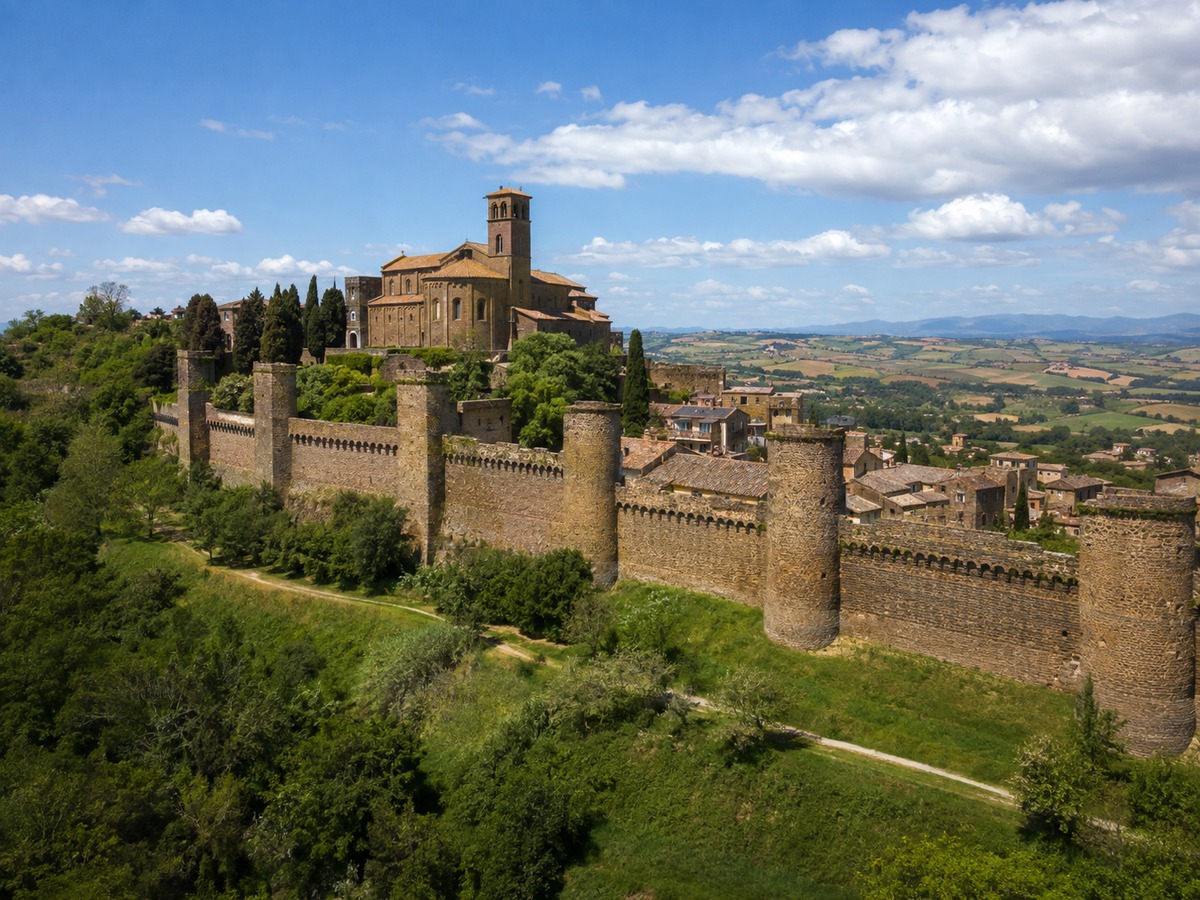
Tuscania: intact city walls and the Romanesque church of San Pietro
An Etruscan city that became medieval, home to one of Lazio's best-preserved examples of Romanesque art.
Read more →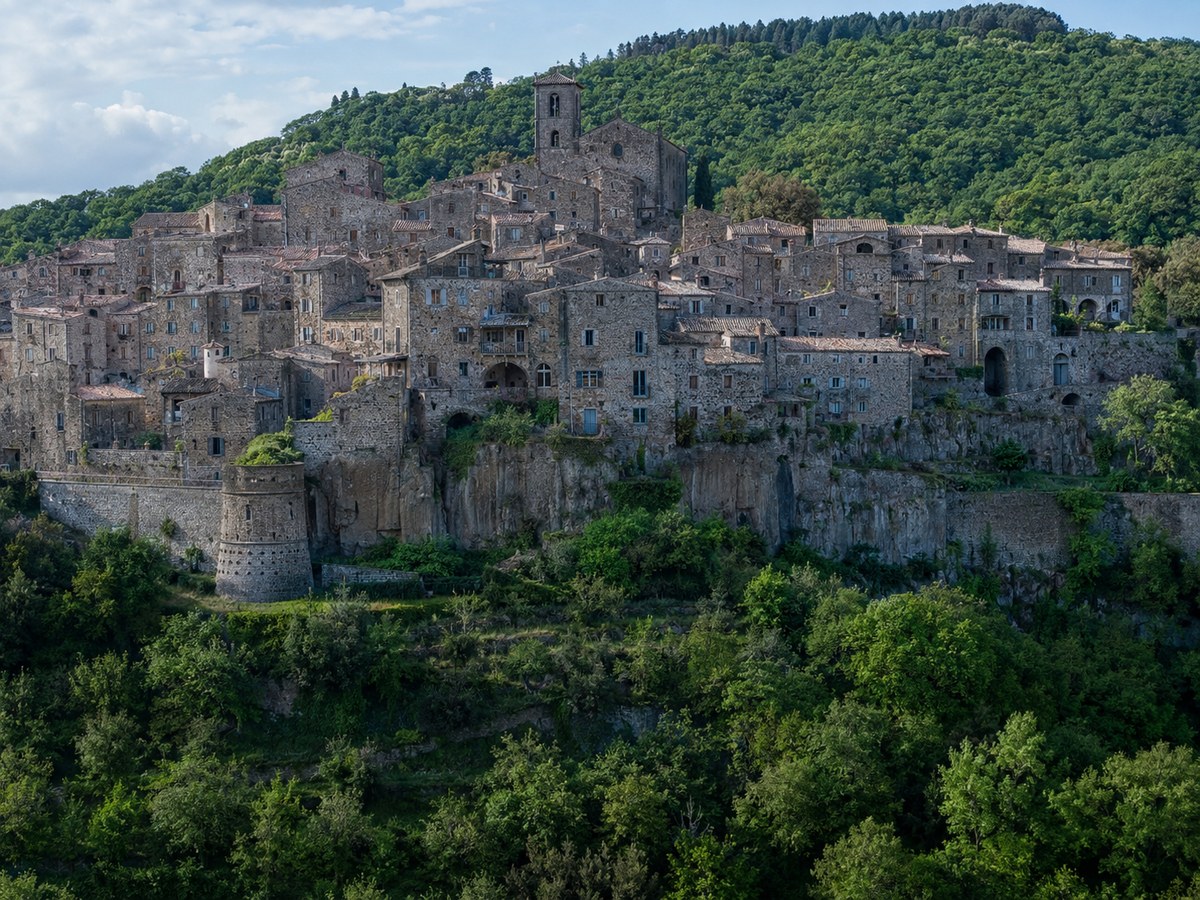
Vitorchiano: the peperino-stone village in the Cimina forest
Listed among Italy's most beautiful villages, built entirely from local volcanic stone.
Read more →