Necropolises & Etruscan sites

Ferento: from Etruscan city to grand Roman theatre

📍 Viterbo ⏱ 1-2 hours 🚗 1h20 from Rome
Ferento: from Etruscan city to grand Roman theatre

Ferento stands on the tuff hill of Pianicara, a few kilometres north of Viterbo. The town was founded in the 4th century BC and grew after the end of the archaic settlement of Acquarossa, on the hill opposite. It later went through Romanisation and reached a particularly important monumental phase under the Empire, making it possible to trace the shift from the Etruscan to the Roman world in a single place.

The layout of the city

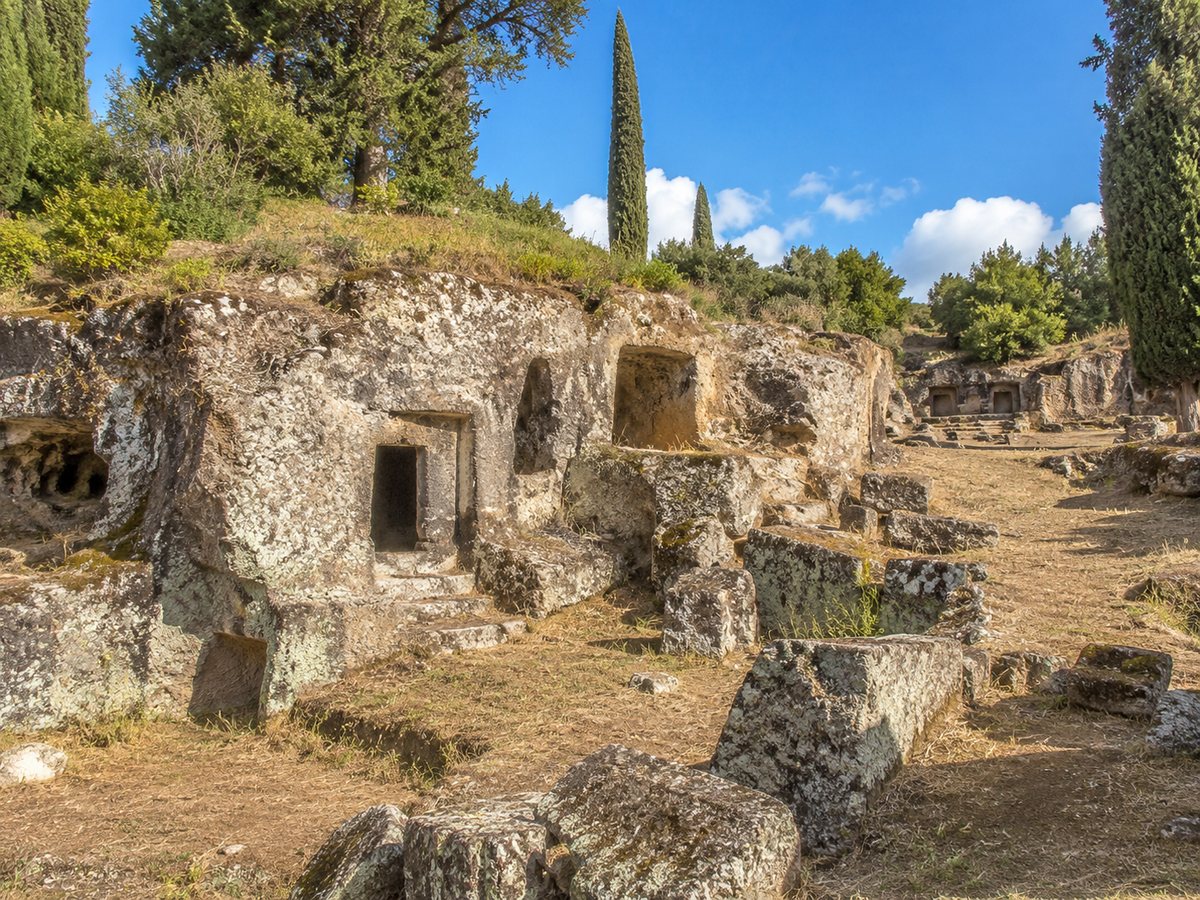
The Ministry of Culture describes a settlement with block-built walls and a regular layout, crossed by the Via Ferentiensis. Necropolises spread around the plateau, in use from the Hellenistic period through to the Imperial age: the chamber tombs and inscriptions found here are important for understanding the Romanisation of inland Etruria.

The Roman theatre

The most visible monument is the theatre, built during the city's great phase of Roman urban development. Together with the remains of baths and other public buildings, it reveals the scale Ferento reached under the Empire — and it's precisely this contrast between Etruscan origins and Roman monumentality that sets the site apart from Tuscia's rock-cut necropolises.

A city destroyed in the Middle Ages

Ferento remained inhabited for centuries, eventually shrinking to a fortified medieval settlement. It was destroyed by the people of Viterbo in 1172 and never became a city again.

The archaeological area can be visited according to hours set by the Ministry of Culture. As it's an open-air site, check opening times and visiting conditions before setting off.

More about Viterbo

The Macchina di Santa Rosa procession: Unesco heritage every 3 September
Events & traditions

The Macchina di Santa Rosa procession: Unesco heritage every 3 September

A roughly 30-metre, 5-tonne illuminated tower, carried on the shoulders of a hundred bearers through Viterbo.

Acquarossa: the archaic Etruscan city on the edge of Viterbo
Necropolises & Etruscan sites

Acquarossa: the archaic Etruscan city on the edge of Viterbo

Houses, streets and architectural decorations have made Acquarossa a key site for understanding how the Etruscans lived, not only how they buried their dead.

Bullicame: the thermal spring of Viterbo mentioned by Dante
Thermal springs & wellness

Bullicame: the thermal spring of Viterbo mentioned by Dante

A sulphurous spring at the heart of Viterbo's thermal basin, known since antiquity and made famous by Dante's verses.

Piscine Carletti: the free thermal pools on the edge of Viterbo
Thermal springs & wellness

Piscine Carletti: the free thermal pools on the edge of Viterbo

Open-air pools fed by the hot waters of Viterbo's thermal basin, just minutes from the historic centre.

Terme dei Papi: the monumental pool and the Natural Grotto
Thermal springs & wellness

Terme dei Papi: the monumental pool and the Natural Grotto

A large pool fed by the Bullicame spring, a natural steam grotto, and a thermal tradition linking Viterbo to the medieval popes.

Viterbo's free thermal areas: Bullicame vs Piscine Carletti
Thermal springs & wellness

Viterbo's free thermal areas: Bullicame vs Piscine Carletti

A short guide to Bullicame and Piscine Carletti, two different places that capture the wilder, natural side of Viterbo's thermal tradition.

Castel d'Asso rock-cut necropolis: cube tombs carved into the tuff
Necropolises & Etruscan sites

Castel d'Asso rock-cut necropolis: cube tombs carved into the tuff

A few minutes from Viterbo, one of the quietest and most evocative Etruscan necropolises in Tuscia.

Viterbo and the Terme dei Papi: the city that gave its name to conclaves
Thermal springs & wellness

Viterbo and the Terme dei Papi: the city that gave its name to conclaves

Lazio's best-preserved medieval old town, and the thermal springs Romans have used for two thousand years.

Where to eat nearby

Where to eat

Caffè Grandori

📍 Viterbo — Via della Verità 25

Bar, pasticceria, gelateria e apericena con musica dal vivo.

Where to eat

Convivio

📍 Viterbo — Via San Bonaventura 15

Cucina tradizionale in chiave non convenzionale.

Where to eat

Eielo

📍 Viterbo — Via Annio 4

Taglieri di prodotti tipici locali con birre e vini artigianali.

See all places to eat →

Where to stay nearby

Where to stay

Country House Le Farine

📍 Viterbo — SS Cassia Sud 35

B&B di charme lungo la Cassia, ideale come base per visitare la Tuscia in auto.

Where to stay

Terme dei Papi

📍 Viterbo — Strada Bagni 12

Hotel con centro benessere e cure termali annesso alle piscine termali storiche.

See all places to stay →

Keep exploring