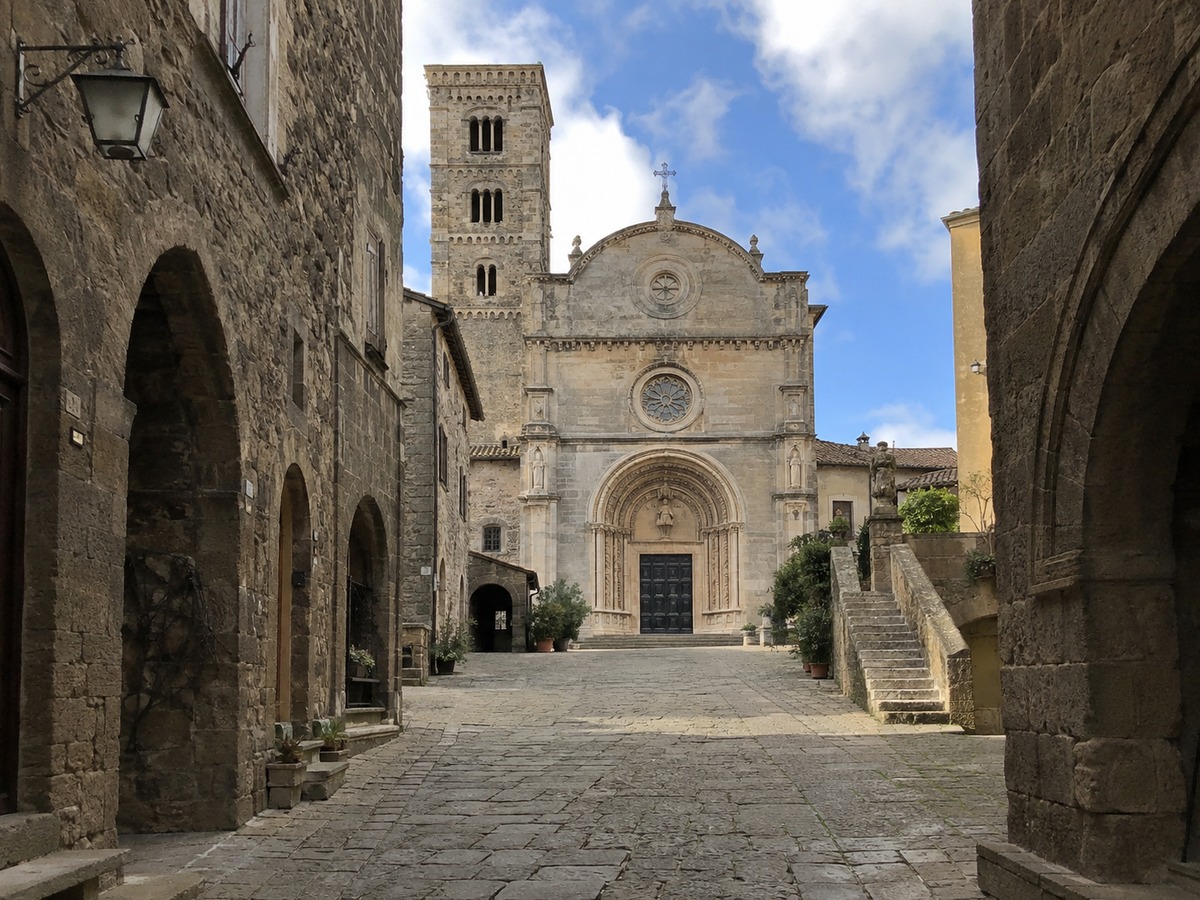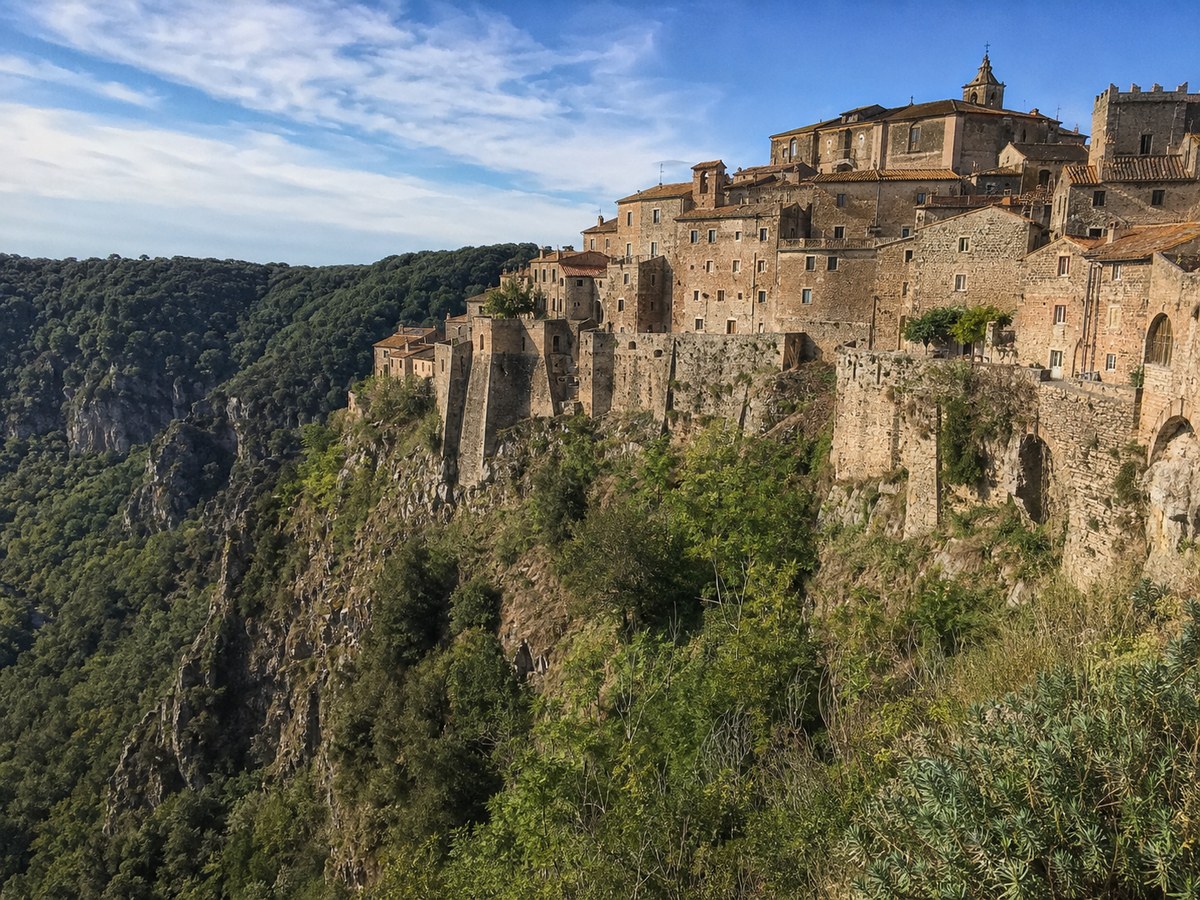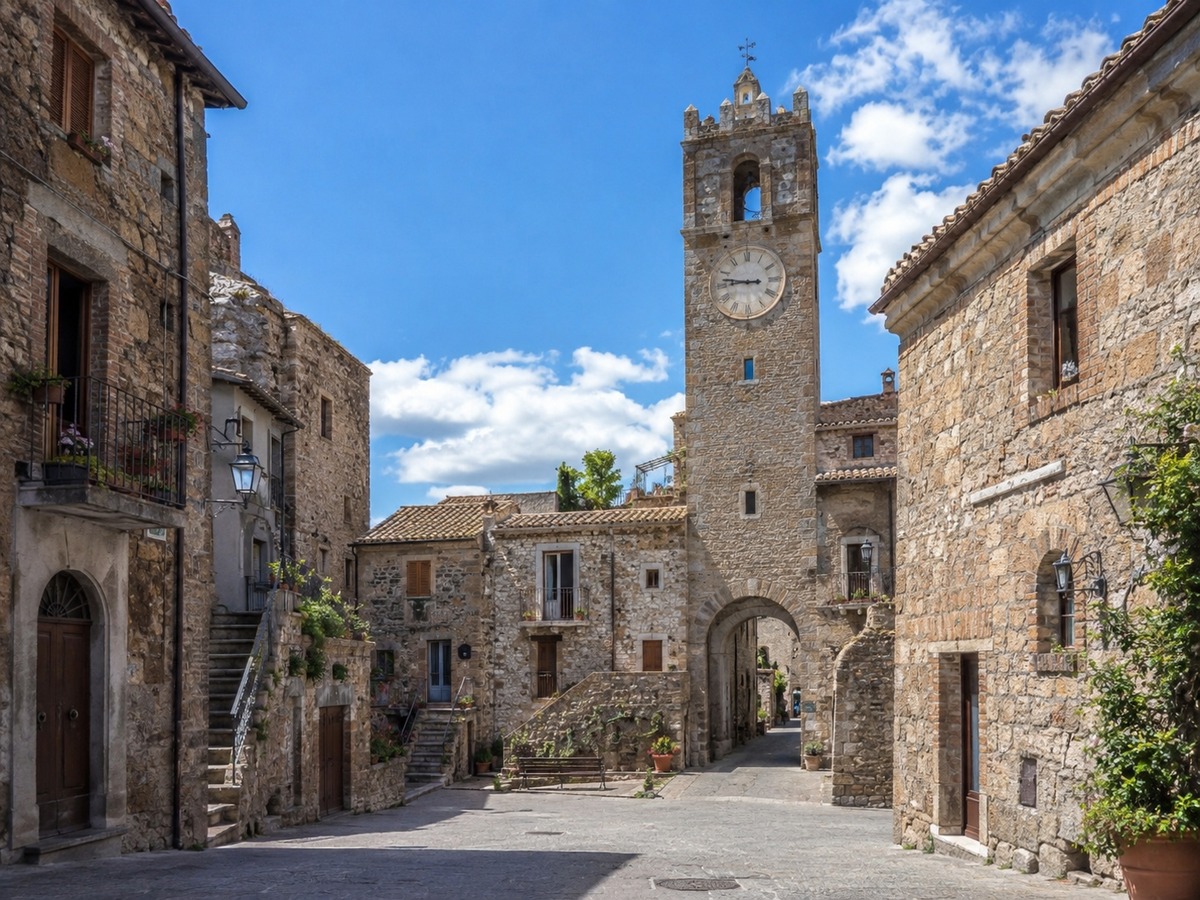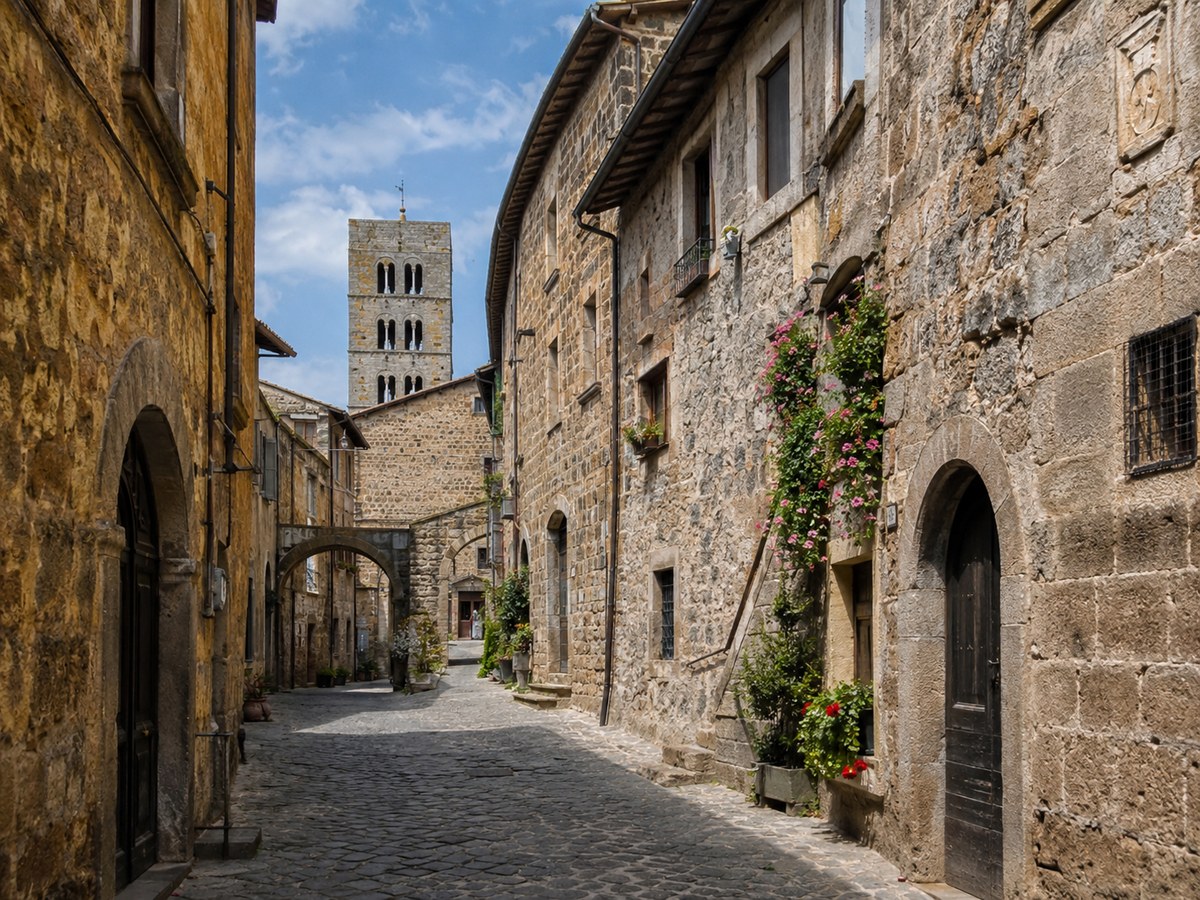
Vetralla sits along the Via Cassia, in a transit position between Viterbo, the Monti Cimini and southern Tuscia. The town's history is closely tied to travel routes: the territory is crossed by the Via Francigena, and for centuries it welcomed travellers heading to Rome. The old town keeps a compact layout, with lanes, squares and churches spread across the tuff plateau.
The village within the walls
Walking through the old core, you find buildings in tuff and peperino stone, courtyards and small open spaces. Vetralla's appeal doesn't rest on a single monument, but on the urban ensemble and its position along a historic route.
The Via Francigena
This stage of the Francigena links the Viterbo area to the countryside toward Sutri. The passage of pilgrims remains one of the keys to reading the territory and its old hospitality structures.
Woods and olive groves
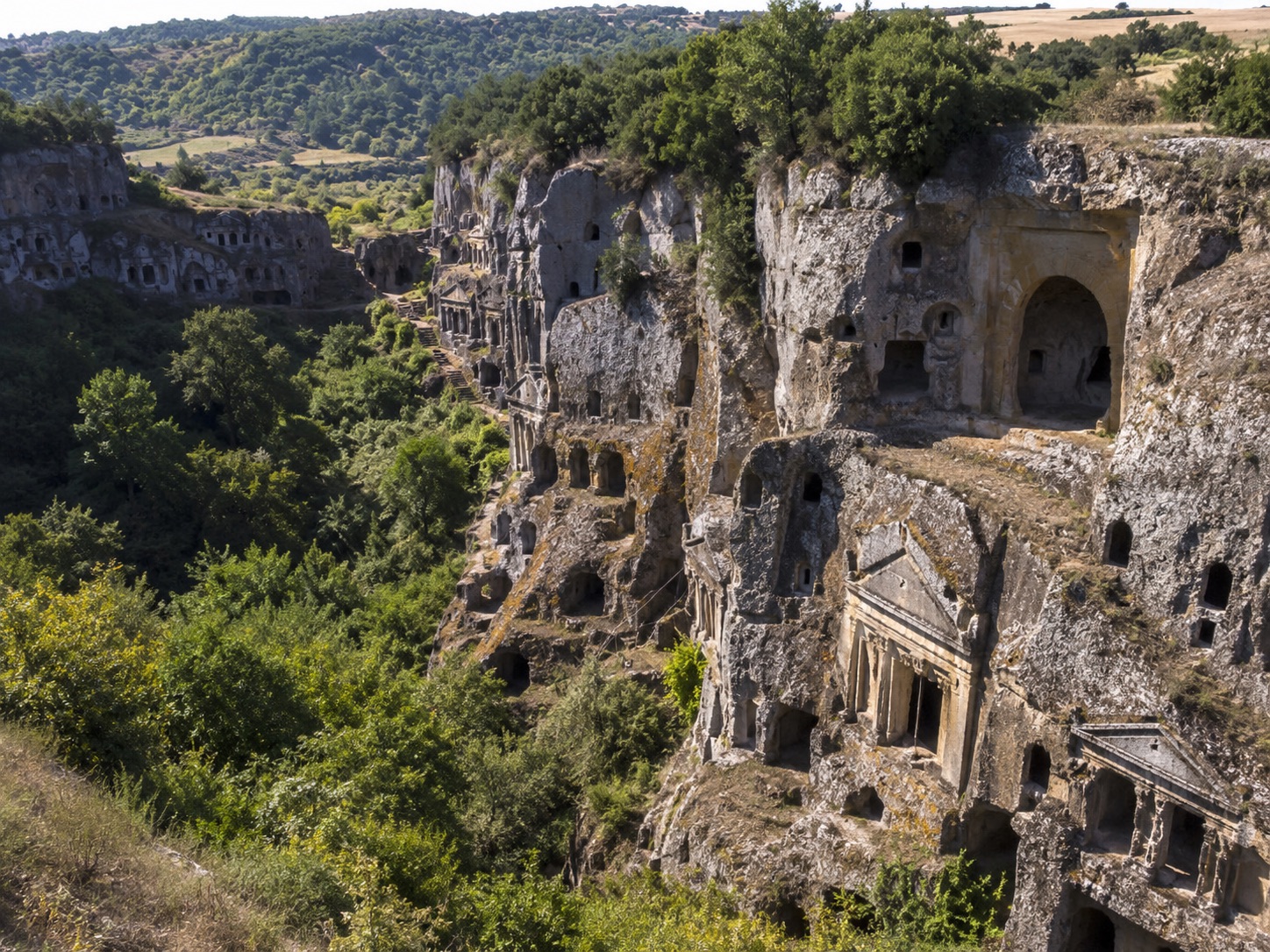
Woods of the Monti Cimini and farmland traditionally tied to olive growing surround the town. Vetralla can work well as a stop between a cultural visit and a walk in nature, including toward the nearby Norchia necropolis.